Classical Architecture and the Future of New York
Tom Klingenstein’s overall project is to recover Western civilization. That might sound lofty, but three years ago he brought me in to create Grand Penn — a vision for a new Pennsylvania Station in New York City. And you would be right to ask: what on earth does fixing a train station have to do with saving the West?
Everyone knows Penn Station, but for all the wrong reasons. It stinks. It’s dangerous. And it fails utterly at its civic function. Over 600,000 people a day are forced through what is essentially a catacomb. When a power failure stranded thousands of travelers last summer, the images looked like something out of a failed state — not the gateway to America’s greatest city.
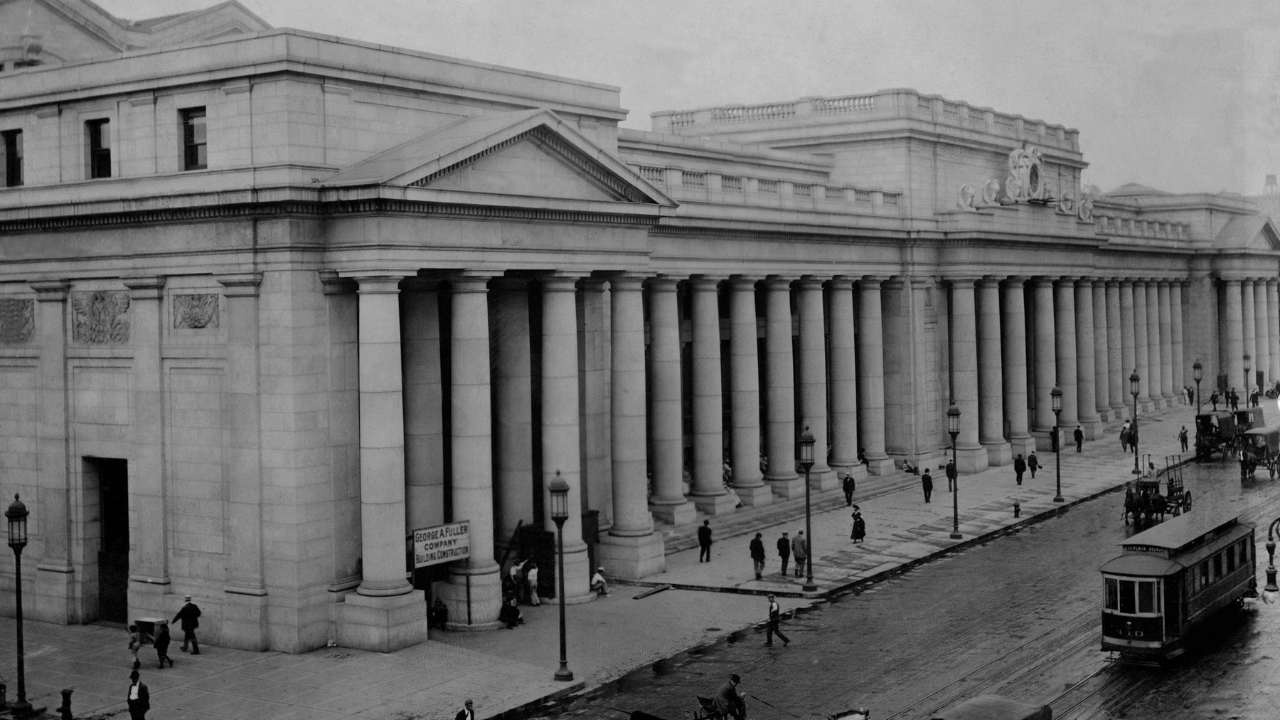
It wasn’t always this way. “You used to enter New York like a god,” they said of the original Penn Station. Built in 1910, it was a masterstroke of classical grandeur and modern engineering — electrified trains arriving beneath a vaulted hall as vast as the Baths of Caracalla. A defiant synthesis of Athenian democracy and Roman order, it was a gift to every citizen, rich or poor.
We demolished it in 1964 in the name of “progress.” Dumped it into the New Jersey Meadowlands like yesterday’s garbage. “Now, you scuttle in like a rat.” That was strike one for the West.
Years later, a new governor proposed a fix. What we got was a loading dock next to a bunker entrance and a committee of railroads in charge of execution. A visual declaration of “no confidence.” That was strike two.
We couldn’t risk a third strike.
That’s when I joined Tom’s team with one instruction: be audacious. Design a station that would not just function, but inspire; that would marry the clarity of classical form with the dynamism of New York City; that would prove that civic virtue — Periclean in its ambition — could live again in steel, stone, and skylight.
We called it Grand Penn. Not a band-aid. A rebirth. A new civic center with the largest concourse in the world, a grand skylit train hall, a major public park, a relocated Madison Square Garden, and above all: the reintroduction of classical architecture as a public language of dignity and inspiration.
I knew it was possible. I had helped lead the Moynihan Train Hall. I served as New York City’s Chief Urban Designer. I’ve seen what can happen when vision meets execution. So we assembled a team that had made the impossible inevitable before: the High Line, Times Square, Hudson River Park. But we needed more than skill. We needed thick skin and a heavy dose of chutzpah.
Then came the inflection point: President Trump was elected.
Let me be blunt. Trump is the only man on earth with the unique set of skills — negotiation, finance, government, and a deep instinct for Western symbolism — that might actually get this done. As a young man, he fixed the Wollman Rink in Central Park when everyone else failed. Penn Station is a far bigger Gordian knot. But if there is anyone who could cut it, it’s Donald Trump.
Because this is not just about transit. It’s about transcendence.
Grand Penn is where Athenian civic virtue meets New York chutzpah. It’s where Pericles shakes hands with Robert Moses. It’s a revival of the idea that public architecture is a mirror of our shared values, and that democracy deserves beauty. That’s the true meaning of classical architecture — not nostalgia, but confidence.
We’ve lowered our standards for too long. If we can’t build a worthy gateway to our greatest city, what does that say about our belief in the city itself? To rebuild Penn Station in a classical, democratic, and daring way is not just an act of infrastructure. It’s an act of civilization.