The Left and Its Devil
Editor's Note
Political conflict in our cold civil war is sustained by a powerful and modern moral imagination that demands the constant discovery of enemies. The destructive Left has organized its politics around the identification of ever-present evil—figures like the fascist, the racist, and the sexist—whose existence justifies perpetual mobilization and moral emergency.
A system built on this logic cannot stabilize. As long as political purpose depends on the continual appearance of such enemies, the conflict will remain permanent and the prospect of a return to the old normal will remain remote.
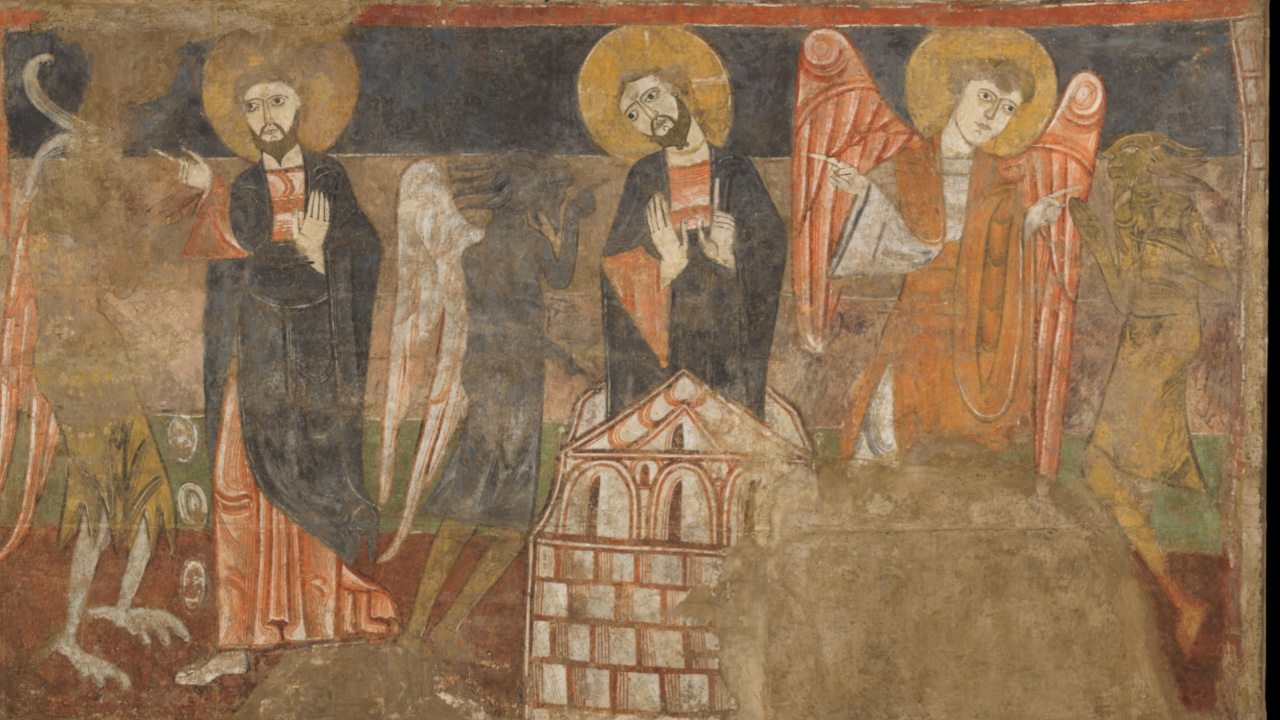
The world is going through a civilizational crisis. The nature of that crisis is weird, unprecedented, and unpredictable, but one thing seems fairly certain: There is no going back to the old normal. This is because only one of the three factions dominating contemporary politics wants to go back or, more accurately, thinks it is possible to go back. But there can be no recovery of the old normal because the Devil has returned. And the Devil goes by several names — “fascism” and “racism” being the most common.
Make no mistake: He’s here to stay.
The most powerful faction of modern politics needs this new Satan, and will not give him up for any reason. This jumbled-yet potent agglomeration of leftist ideologies — antiracism, feminism, environmentalism, and postmodernism — is united not so much by what its supports as by what it opposes: the western tradition of white, patriarchal oppression (i.e. the new Devil) which must be overcome. What would the people in this faction do if they ever succeeded in defeating the fallen angel of fascism? It’s a vexing question.
The second group consists of those — generally on the Right — who recognize and accept that a war over the future of civilization is under way and want to fight back. To be sure, no one in this group is entirely clear how to achieve victory. But they accept, regretfully, that the old normal is irrevocably gone.
The third faction, already discussed above, is larger than the second, but less influential because it is comparatively passive. These folks, vaguely conservative, are mostly (but not exclusively) apolitical. By and large, they just want to be left alone. They wish things would calm down and go back to normal. But the apolitical rank and file, as well their more vocal and politically aware spokesmen, aren’t prepared to do very much because undertaking anything “radical” discomfits them — radicalism on both sides being, in their view, the source of our problems in the first place.
As research for a new book, I’ve been reading a lot about how the ancient Greeks thought about questions of divinity and the supernatural. The religious experiences that were the backdrop to Greek tragedy and Socratic philosophy offer important insights for our contemporary dilemmas. In classical Athens, the civic piety holding the city together had started to crumble. By the fifth century B.C., the Olympian gods were no longer believable to educated citizens. The horrors of a long, devastating war with Sparta had also caused the common people to wonder whether the gods who were supposed to be their protectors really existed.
Ancient Greek religion was complicated, with a variety of ancient, new, and foreign gods existing together in an uneasy mixture. What is relevant for us is that the oldest and most primitive “chthonic” gods of the underworld — the gods of retribution and wanton destruction — touched deep psychic needs that the (relatively) rational, anthropomorphic gods of Mount Olympus did not reach. The ancient, mysterious gods of Fate, or what the Greeks called “the Furies” were not very comforting: Their vengeance targeted blood guilt or “pollution,” which often looked like sheer malevolence. But these supernatural forces at least made sense of a natural world that often seemed cruel and arbitrary. Zeus’s “impartial justice” was less satisfying somehow; his lightning bolts seemed to strike the innocent almost as often as the guilty, which was part of the problem. The key point for us — to put the matter into more modern, Biblical terms — is that mankind seems to need the Devil more than he needs God.
Let me be clear: I’m not making any comment about the truth of Scripture or Christianity. I’m speaking only about what classical political philosophy teaches regarding the human soul. On a moral and psychological level (and for that matter, a practical level, too) political life requires coercion more than persuasion. Punishment is the one thing no society can do without. Thus, in the classical world, obedience to the law was paramount, as the most visible manifestation of loyalty to the community. For the ancient city-states, violating the sacred law meant you couldn’t be trusted; you became essentially an outsider, a heretic. And in the primitive world of us-versus-them survival, outsiders were the greatest threats. This can be seen not only in ancient Greece, but even in the Old Testament: Jehovah protected his chosen people fiercely, encouraging them to smite their unclean enemies.
Fast forward to the Enlightenment, which attempted to dispense with all this “superstitious” nonsense and construct a purely rational society. That utopian goal, it turns out, didn’t work. Human beings are not driven by pure logic, like Vulcans. We can’t live without some transcendent source of moral authority that gives structure to our lives.
But having rejected God, nature, and tradition, the enlightened sophisticates of the Left soon confronted a terrifying emptiness in their souls. These resolute moderns were forced to invent a new moral framework to make sense of life. Above all, atheistic liberals needed something like a sacred community of fellow believers, which all human beings have always craved. So the Left invented a new theology, and especially modern symbols of pervasive evil — a new multi-faceted Satan. This is how we got the deranged regime of anti-fascism and anti-racism that our leftist ruling class is intent on imposing upon the whole western world.
Here is the crucial point: Now that they have filled their empty spiritual jars with a bitter new wine, the woke ideologues will never be able to let go of their man-made Satan. It would mean returning to the abyss of meaninglessness that they struggled so hard to overcome. In the Manichean world of good vs. evil that the Left has invented, there will always be fascists, racists, and sexists to demonize because permanent enemies have become a therapeutic crutch. This is why there can be no return to the old normal. A substantial portion of the country cannot live without perpetual war. The Left has given up its dream of the peaceful, rational society in favor of constant mobilization against deplorable racists. It was a large price to pay, but endless war turned out to be preferable to the psychic horror of a life without purpose.
We’re faced with this fanatical army of deranged holy warriors, and what we’re supposed to do about it is anyone’s guess. But the first step in confronting any problem is to understand it.