The Enemy Within
Editor's Note
Ten years ago, Michael Anton’s *The Flight 93 Election* warned conservatives that the stakes of American politics had become existential. Donald Trump’s election bought the Right time, but it did not resolve the crisis Anton described. A decade later, the question is whether our political system remains capable of preserving the country we wish to conserve. In this provocative and unsettling essay, G. Bednar argues that the answer is “no.” The divisions between Republicans and Democrats have hardened into something much deeper: two peoples with fundamentally incompatible understandings of America, its history, and the good society.
Bednar asks conservatives to confront a possibility many would rather avoid: that electoral victories, however important, are insufficient to reverse America’s decline. The author proposes a different course, beginning with the consolidation of conservative communities and the recovery of the courage, conviction, and willingness to sacrifice that made the American experiment possible. His conclusions will make some readers uncomfortable. They should. The hour is late, and the cost of refusing to recognize our predicament may be greater than the cost of facing it.
Opponent [uh-poh-nuhnt] / əˈpoʊ nənt /
NOUN: a person who is on an opposing side in a game, contest, controversy, or the like.
Enemy [en-uh-mee] / ˈɛn ə mi /
NOUN: a person who feels hatred for, fosters harmful designs against, or engages in antagonistic activities against another.
It has been ten years since The Flight 93 Election challenged the virtu of the American people. Since then, voters have answered the essay’s call twice, perhaps three times. Enough Americans understood what time it was: time to break glass in case of emergency. Despite the wins at the ballot box and the sound and fury of the Trump political decade, the fortunes of the Right remain in great, perhaps greater, peril. We made it to the controls, but the aircraft remains in an uncontrolled descent. On the eve of the latest “most important election of our lifetime”, do we rush the cockpit again or finally recognize that it doesn’t really matter that much?
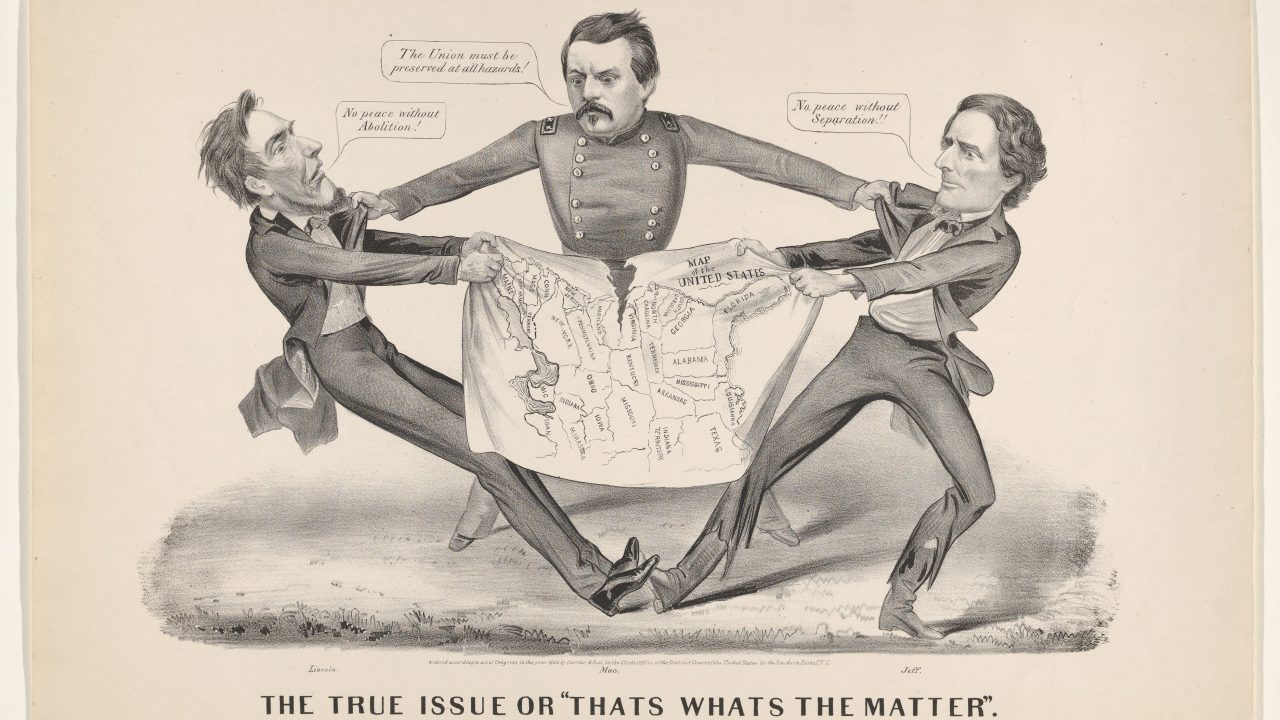
The decade failed the great hopes of the Right but provided a priceless insight: the system we have known, its leadership and processes, can no longer achieve the Right’s existential imperatives. America is in a post-Constitutional phase. We are again a house divided; opponents have become enemies. We can avert our eyes from the bitter scene, but the truth remains.
If the Right does not orient to this ominous reality, it will continue to lose and be extinguished. We contend with an enmity not born of Obama or the 1960s but the spawn of deep intellectual currents that have mutated and metastasized with accelerating speed in recent years, a conflict finally not of parties but of metaphysics, a crisis not of policy but of the spirit. Our welling unease is the realization we can no longer ignore the enormity of the moment.
No Progress
The political pathologies of fall 2016, the things the Right cares about, are at best no better, and probably worse. How might the Founders assess the conservation of their core objectives: (i) limited government, (ii) government by the people, and (iii) respect for natural rights?
The US government is a sprawling monster. The federal deficit was $585 billion in 2016; it’s projected to be $2.1 trillion in FY 2026 (Reuters). The national debt doubled from $20 trillion to $40 trillion! The government’s share of GDP is now 38% of the largest economic organism in the history of the world.
Government “by the people”? The Article I centerpiece of the Founders’ design is broken; the “power of the purse” has not been properly exercised in 29 years. Budgets simply increase by continuing resolution. Power resides in an unelected, self-interested administrative state. The past decade proved its existence and insatiable instinct for self-preservation. Because Congress is incapable of meaningful legislation, Americans wait in supplicant anticipation for the unappealable decisions of nine lawyers. Recently, judges at all levels have asserted power over the popularly elected President on foreign, domestic and White House design policy. A Federal Reserve, unknown to the Founders, deliberates in a temple to determine whether Americans can afford homes and cars.
As for natural rights, someone would have to explain Anthony Fauci and COVID to the Founders, at once the worst domestic policy disaster in United States history and the greatest government overreach.
The 250th anniversary of the Declaration of Independence was muted by the foreboding, the recognition we no longer live in the Founders’ system. Gallup says Congress has a 10% approval rating. Trust in government is 17%. Government of the people, by the people and for the people is rejected by the people.
We rushed the cockpit in 2016 because the gamble made sense given the leadership we could expect. Astoundingly, the past decade has seen already low expectations of the extant political class collapse to nothing. Since 2016, AOC and The Squad, Jasmine Crockett and Eric Swalwell have risen to prominence. Even twenty-five years ago, one might, without embarrassment, repeat the lines about the Senate being “the world’s greatest deliberative body” or “the most exclusive club in the world” — but Hirono, Booker, Warren and Schiff? The only Democrat Senator who makes much sense had a stroke. More than one Senator has admitted that “the Senate is broken.” Congressional hearings have become a sad spectacle, a mirror of what our government has become. An exasperated Secretary of State Rubio asked at a recent congressional hearing, “Are you guys kidding me? I mean, is this the Foreign Affairs Committee or is this, like, a circus?”
Since 2016, the GOP establishment has mustered more resolve to oppose MAGA than it ever did the Left. They are waiting Trump out. For decades, Mitch McConnell insisted that we compromise so he could win the next election. MAGA was created to replace the Beautiful Losers, to end the DC uniparty kayfabe. But the petty selfishness of Tillis, Casey and Cornyn remains. John Thune is Mitch with a chin. Thune’s quixotic concern for the ‘decorum of the Senate’ is inexplicable with decorum so far gone.
“You should run for Congress…” sounds like a taunt. Going to Washington now isn’t about solving problems but becoming part of them. “Public service” seems an inapt description for what looks more like performative klepto-narcissism. Who clamors to be part of something with a 10% approval rating? Who seeks a leading role in the tragicomedy of national degradation, anyway? Good people may go to DC, but they don’t survive there.
The decade insists upon a conclusion: what we once saw as ineffective leadership is something more dark, not fecklessness but malevolence. Ten years ago, we might have said the GOP leadership didn’t understand; now we know they don’t care.
Two Americas, Metaphysical Divide
Rachel Maddow and Sean Hannity both invoke “the American People.” But these words have become a lie. What Hannity and Maddow mean is their American people — two different peoples. Americans are angry with ICE. But half are angry because ICE is doing its job and the other half because ICE is not doing enough. The polarity is manifest everywhere. Is climate change an existential crisis or a hoax? Is the 2nd Amendment a sacred right or an embarrassing anachronism? Are the police the problem or the solution? Are there two genders or 256? Vax/Antivax? Is America an exceptional or fundamentally racist nation, to be revered or despised? Cultural ephemera are not exempt: Sophie Cunningham or A’ja Wilson? Jack Hughes and Megan Rapinoe can’t be heroes to the same people.
Samuel Huntington observed that America succeeded because it could answer the question “who are we?” in one voice. The answer was the American Creed: liberty, individualism, limited government, private property, the rule of law and a religious moralism. Ideas, yes, but ideas driven and preserved by a coherent people on a bountiful continent they conquered. The problem is not that America cannot answer Huntington’s question now; it is that we hear conflicting answers.
A divide this wide, the unnatural edifice of Woke, was not created overnight. Obama did not create this conflict, nor did the 1960s; its origin is marked in centuries. Mutations of thought incubated and compounded—the hubris of the Enlightenment, historicism, the Progressives to the Frankfurt School. Among the legion failures of the American academy, the most indictable is its abnegation of the responsibility for which it was created: to convey, for fulsome consideration, this two-millennia-long intellectual conversation of the West. Instead, our universities impose the extreme terminus point of this evolution as the unquestionable truth. This complete story shows us who we are, how we arrived here and why, revealing the wider metaphysical, ethical and political horizons now obscured by the indoctrination of the present.
The university might have helped us see that we hit a dead end. Leo Strauss wrote, “The crisis of modernity reveals itself in the fact, or consists in the fact, that modern Western man no longer knows what he wants — that he no longer believes that he can know what is good and bad, what is right and wrong.” Though these waypoints were derived from varied sources, humans had ALWAYS had such waypoints outside themselves. In the past ten years, we made the final leap into a warped reality. Widespread support for boy champions in the girls’ high jump, sex-altering surgery for twelve-year-olds, drag shows for toddlers, the gleeful celebration of the right to kill babies at full term and heroine status for a mother who strangled her three babies in the basement (the list could go on) indicates a human denouement that transcends policy.
Indeed, the self-loathing of the Western Left, a people insisting upon its own negation, is a pathology sui generis in world history. Bishop Barron wrote that we are in nothing less than “an anthropological crisis — an erosion of confidence in the moral and intellectual constitution of the human person.” The imperatives of the modern Left — scientism, secularism, relativism and its cultural Marxist vanguard — grind against the dwindling holdouts of intuition, custom, patriotism, faith and transcendence: that is to say, Tradition. The Left does not seek a softening of, or accommodation with, Tradition but its destruction.
The two sides leer at one another across a chasm. Easy solutions are impossible. Ranked-choice voting and open primaries are fanciful gimmicks that entirely misunderstand the problem. Calls for “dialogue” and “civility” are naïve or disingenuous, and even these are fading. Finding a viable middle only works when one exists.
Opponents to Enemies
Division this great creates enemies. “Vilifying our political opponents is a signal that we consider them to be enemies instead of opponents,” a Johns Hopkins study notes. “The work of governing a democracy requires compromise and mutual respect. These sentiments make that respect nearly impossible, which threatens the health of democracy.” Nearly half of the US electorate thinks members of the opposing party aren’t just wrong on politics — they’re “downright evil.”
We don’t need studies to see this. Blue-state governors nullify federal action and encourage armed conflict. Tim Walz said Minnesota was “under attack,” “fighting a war against the federal government every day.” JB Pritzker said Chicago was being “invaded” by ICE. Hakeem Jeffries said of Republicans, “we have to break their spirit. Either MAGA extremists are going to break the country or we are going to break them.” America cannot fight other nations when we hate each other more than the world’s most depraved regimes. Senator Murphy reacted to an Iranian ship’s slipping America’s blockade with “awesome.” Rashida Tlaib, condemning America in the Iran conflict, referred to the country she represents by saying, “this is who THEY are.”
The system we knew operated on debate, persuasion and compromise. But Hutus and Tutsis don’t debate and compromise. The legacy of stockpiled genius and sacrifice America is squandering allowed us to long take for granted that the dysfunction of the rest of the world could not manifest here.
Obama was the first President of half of a divided nation. He observed the rituals of unity, but was the fully articulated agent of intersectionality and a globalist agenda. The America he cared about was not the Founders’ America, our America, but the one he vowed to “fundamentally transform.”
In 2016, Donald Trump was quickly taught the difference between opponents and enemies. He was the target of a coup airbrushed from history like a Stalin-era photo. Trump is so jarring, so necessary, because he openly leads his half of America. He was criticized for speaking the unspeakable truth when he said, “The enemy from within, in my opinion, is more dangerous than China, Russia and all these countries.”
Enemies transact in violence. Like “diversity is our strength,” “violence accomplishes nothing” is wishful propaganda. Violence has always been the prime mover of political change. With its Leninist DNA, the Left inherently understands this. Left-identifying Americans between the ages of 18 and 39 were almost three times more likely to agree that it could be justified to resort to violence to achieve political goals, exceeding the Right in willingness to resort to violence at every age level. Again, we don’t need studies. The Left maintains special operations directorates like the Southern Poverty Law Center; it deploys battalions of professional street agitators — BLM, Extinction Rebellion, Code Pink — and, with ANTIFA, at least one paramilitary force. Trump assailants and trans shooters populate our new “assassination culture.”
The assurance that we need not worry about civil conflict because lines of Blue and Grey, Red and Blue F-18s, will not square off is a straw man. Though that is likely true, something just as bad is possible. Modern civil wars look like Beirut, South Africa or Belfast — societies riven with hate, separate camps living a surly coexistence, incapable of solving their problems, much less doing great things.
Political violence in America will increase. If one of Donald Trump’s would-be assassins finally succeeds, much of America will not mourn but celebrate, even openly. Charlie Kirk’s assassination and its widespread affirmation validated political violence. The more you love America, the harder this is to admit, but the rawness of the observation is not as important as whether it is true.
Not Victory, Clarity
This decade of strife did not provide victory, but it did provide clarity. The crumbling normalcy, dysfunction and conflict, the dissonance cannot be ignored. Normie, Boomer America and its cherished, comforting presumptions are gone.
Take patriotism: in 2000, both Republicans and Democrats reported an 80% affirmative response to being “patriotic.” Today, the Republican response is 78% and the Democrat response is 40%. In a 2023 poll, 72% of young Americans replied that in the event of a major conflict involving the US, they would not be willing to join the military. In the event of an October 7-style military invasion of America, almost half of those aged 18–29 said they would not be willing to risk their lives, and 30% said they would rather surrender than risk death.
Take socialism, the antichrist of the American Creed; it is ascendant and governs more Americans than at any time in American history. In a recent poll, 58% of registered Democrats had a favorable view of Socialism; 32% had a favorable view of Capitalism (among Republicans, 75% viewed Capitalism favorably and fewer than 15% did the same for Socialism). Take free speech: support for free speech among college students and other Americans has declined significantly since 2017.
Glossy recollection of the amicable opposition of Tip O’Neill and Ronald Reagan, “friends after six,” is not a source of hope but a warning as to how fundamentally things have changed. Imagine the backslapping laughter of the two old Irish guys who both loved America at the idea of transgender admirals. Trump and AOC now fill these roles. Reagan said, “Freedom is never more than one generation away from extinction. We didn’t pass it to our children in the bloodstream. It must be fought for, protected, and handed on for them to do the same.” This seemed like a speechwriter’s flourish then; we now appreciate the prescience.
Deliberative, representative government presupposes a citizenry united enough, culturally, historically, morally, in its view of the common good; “a two-party democracy cannot provide stable and effective government unless there is a large measure of ideological consensus among its citizens.” America was not intended to accommodate discordant factions — what nation is?
The fundamental dissonance in the politics on the Right today is between the wide invocation of the extraordinary pronouncements of crisis, division and danger and the absence of commensurate action. Charles Peguy wrote, “We must always tell what we see. Above all, and this is more difficult, we must always see what we see.” America looks like a late-stage empire, broke and overextended, ‘immoderate greatness and prosperity having ripened the principle of decay.’ We do not perceive a “Golden Age” as much as the end of one. A unified America could meet great challenges. What a divided America can overcome is unclear.
The status quo of decline is only sustainable for the Left. The path we are on, bankruptcy, a reversion to the hollow EU mean, creeping intersectionality in all things, is what they desire. The Left wants American failure, to expose exceptionalism as a lie, to punish America for her sins. For conservatives, the status quo is the path to extinction.
Many of those who should be defending America insist that alarm at “seeing what we see” is “giving up” on America. The opposite is true. Their protests smack of deflection at the criticism of the status quo over which they preside. The patriot loves the patria like the father loves the son, enough to be honest. To restore an America we recognize, a necessary first step is to acknowledge it no longer exists.
The Flight 93 Election was about trying to revive the Right’s priorities within the system, but the system would not allow it. It was always unreasonable to think one man could fix it. The Trump decade did not mark the incipient triumph of a more traditional America — it marked the beginning of something finally worth calling resistance. For this, Donald J. Trump deserves the enduring gratitude owed one of the most important Presidents in American history. He did not create the divide but was the lightning rod that flashed light upon it. The Left and the craven Right hate Trump for the same reason: he laid bare the incompatibility of the two Americas. He could not be a savior, but he was a sentinel. He showed us what the moment requires: “Fight, Fight, Fight.”
What is at Stake? Everything
The stakes of the fight are…everything. Not long ago, losing meant a top tax bracket of 39% instead of 28%. The Founders’ essential safeguard was a government too limited to oppress. But a leviathan government aggravates the incompatibility of the two Americas. The power and reach of today’s state make the stakes of a change in power increasingly existential for the contestants. The new, serial reversal by one administration of hundreds of Executive Orders by the previous administration is unsustainable. The government of the Founders has been transformed into a sprawling instrument of vengeance two factions wield against one another. We can guess what is coming the next time a Democrat sits in the White House.
Europe shows us where we are headed. The long-prophesied demise of the West is in its terminal stage. France is burning, Spain invaded, Germany and the UK unwilling to protect their borders, their culture or their girls. The issue is no longer wine quotas but the survival of civilizations. Somewhere, Enoch Powell, Dominique Venner and Sam Francis are smiling.
How far behind Europe is America? The convergence is quickening. The Pledge of Allegiance and the Ten Commandments are suppressed while the call to prayer is ascendant. Zohran Mamdani took the oath of office in the largest city in America on the Koran and openly quotes Antonio Gramsci. Kamala Harris and Hakeem Jeffries urge the Left to “brainstorm — there are no bad ideas”; packing the court, Puerto Rico statehood and abolition of the Electoral College are on the table. The Left has already declared a State of Exception. Hasan Piker is not “just a podcaster.” He is the avatar for the animating energy of the Left in America; Lenin is his hero; “F#@% the Constitution” and “America deserved 9-11” are his mantras. Yes, this IS happening here.
Jean Raspail’s The Camp of the Saints was a terrible book — terribly prescient. He foresaw that those entrusted with a priceless inheritance, not theirs to ruin, would nevertheless surrender it with platitudes. George W. Bush felt it important to remind us recently that Islam is a “religion of peace.”
What is it we fight to conserve? Under the sustained bombardment of Modernity, we cannot forget that for a conservative the Overton Window is framed on an absolute, not relative, scale. Tradition has been losing for so long that it has come to rationalize, tolerate with a shrug, the dystopian present.
We seek basic things; we ask basic questions – reasonable, rational and just. And “we” should mean a broad coalition on the Right. The crisis faced by the Right calls for an old-style United Front. The Paleocon, Neocon, Natcon, Libertarian and Integralist squabbles misunderstand the moment. Debates about entwining Catholicism and government are fancifully premature.
When illegal aliens cross our border, why can’t we just send them back? Why are we giving illegal aliens that are here billions in health, housing and education benefits? Why do we accommodate widespread retail theft? Why has the killing of unborn, even born, babies become an act of veneration? Why can members of Congress trade on inside information? Why are my children being discriminated against because they are white? Why did we spend $2mm for LGBT sex changes in Guatemala and $20mm for Sesame Street in Iraq when we have a $2Tr deficit? Why are the public schools good at teaching my children what I believe is wrong but little else? Why can’t our biggest cities be clean? Why would it ever make sense not to require voter ID? That these things seem impossible to hope for is a form of Stockholm Syndrome.
The most stark example of our capitulation is violent crime. A basic obligation of every society is to protect its women. If it fails at this, it is failing. The systemic, intentional release of violent predators onto the streets our wives and daughters walk confronts the elemental duty of the husband and father. Is it wrong to understand the slaughter of Iryna Zarutska by a repeat violent criminal intentionally released onto the street as a gauntlet thrown before us? Are these countless, preventable crimes some sort of test to see if we are still paying attention and retain any self-respect? Anger is a bad thing in our therapeutic, feminized land. But righteous anger is a touchstone of a just and healthy society. Nigel Farage was asked how Britons should react to the facts of Henry Nowak’s stabbing death: “pure, cold rage,” he replied. Centuries before, Edmund Burke declaimed the want of outrage at the mistreatment and execution of Marie, the Queen of France: “I thought ten thousand swords must have leaped from their scabbards…but the age of chivalry in Europe is gone.” From Marie to tampons in men’s bathrooms is the same long, descending line.
Separate, Consolidate, Reinforce
Tradition and radical Modernity are incompatible in America and everywhere. The Right has been negotiating with political terrorists. But the reestablishment of a semblance of Tradition worth the name is impossible in one America; it is too far gone. This recognition is as unsettling as it is necessary.
Rod Dreher was right; we have to separate, concentrate and reinforce to create living environments worthy of our families and communities. A rational Overton Window, the simple objectives above, cannot be achieved on a national basis. But the Benedict Option does not yet have to mean small farm communities in Upstate New York. Only two years ago, 75 million people voted for Donald Trump. Consolidation and reinforcement can happen in entire states and regions in America. It is wrong to assume places like Texas and Florida do not require such reinforcement. Stopping the march of radical Modernity requires every committed partisan. The dilution of our influence in a polity where the ‘march through the institutions’ has already occurred is slow asphyxiation.
The Flight 93 Election remarked that one would need to “dream big and pour a tall one” to foresee the restoration of limited, constitutional government in America. This is more true now than in 2016. But one can still dream of, and soberly work for, this in places populated by the millions of patriots who have not yet forgotten their legacy.
This is defensive, but ambitiously so, and reflects the reality on the ground. Reinforcement is the only path to make rational crime, immigration and economic policy possible and allow the unapologetic reconquest of a deracinated culture. When Blue partisans are leaving these places as increasingly inhospitable, imposing on them the same choice long forced on the citizens of the Right, we will know we are winning.
Who Will Fight and Who Will Lead
We should no longer delude ourselves that distant, incompetent and self-interested powers far away will be our salvation. Conservatives voting with their feet and taxes is real, bottom-up action with impact. As in our own Revolution, a rising from below, a levée of the committed is required. To view moving from California or New York to Wyoming, for instance, as an undue or unnecessary inconvenience is to misunderstand the moment and to fail to respect the much greater sacrifices made to create our country. The Left has proclaimed that “3.5%” of the population, if active, can move a society, the same idea as Lenin’s vanguard. This dynamic can work for the Right as well. Courageous men and women can make a difference. Real leadership makes small groups into larger ones.
The Right muses that it cannot point to the Washington or Lincoln who will deliver us. It doesn’t work this way. As Aristotle said, the moment makes the man, not the other way around. In the moment, the men on the monuments were just men whose response to the moment elevated them. Trump is an example of a leader who emerged for the moment; he would not have been possible, or required, in the Reagan era, only his own. The Washington and Lincoln that can build on what Trump started can emerge from those who answer the current call of Tradition.
The American Right may also bear an exceptional responsibility. What people, what nation, has the numbers and resources to defend the Tradition of the West outside an American Redoubt?
Friends and Enemies
The lines in our civil war have been drawn. The Left tore down the screen on the friend-enemy distinction in 2016. Trump quickly grasped the reality: opponents seek reconciliation as enemies seek victory. The Modern Left always understood this. A $500 check to the National Republican Senatorial Campaign Committee and making sure you vote on election day are inadequate to the moment.
Tradition is only viable if it can establish breathing room from the taxing, regulating and police reach of federal power. The past decade makes clear a meaningful federalism will only be established with a fight. Blue combatants showed us the way. ICE and BLM protests, the Left’s apparatus of action, work against federal power. Governor Abbott’s defense of Texas’ border, in defiance of the federal government, was precisely what was required, but as a sustained, meaningful act, not a little show. We need sanctuary states, not for illegal aliens, but for American citizens. Wyoming should pass laws making the state a refuge for Americans oppressed by the acts of federal or state governments: confiscatory California wealth taxes, unconstitutional gun restrictions, punishment for refusing to bake wedding cakes. It was always a bit surprising that the Canadian truckers beat American truckers to it. ‘Prompting a constitutional crisis’ is not a risk as much as an objective; in fact, the crisis is already here.
Trump’s banning of CNN, MSNBC and others from the White House is precisely what is required. They are not “journalists”; they are the sworn, mortal enemies not only of Trump but of all the economic, social and spiritual inheritance of the Right. The façades of the enemy should be torn down. The Right needs to start saying “no.”
The Pain of Effort or the Pain of Regret.
There is a growing sense that something hard is summoned from us.
Those who seek to preserve Tradition in America face the pain of effort or the pain of regret. Regret is the easier initial path — self-delusion and inaction, or halfhearted action, allow surrender to be mercifully disguised by time. But the pain of regret lasts forever. The more you understand America, the more you see her imperfections but ultimately appreciate her greatness. What pain ranks worse than the recognition America became Starmer’s UK or was subsumed by the same whiny decay as California? We should dread the fate of Raspail’s Colonel Degrasse — a character of noble pathos, true to his duty but too late and alone.
Tradition’s enemies have laid down their challenge. Warning of violence is not a call for violence; self-defense is the original natural right. The Democratic Socialist Left — the only left remaining — has energy and conviction in its casus belli. What of the Right? In her wars, America sent her sons to fight and die for nothing more than free and fair elections, freedom of expression, the rule of law and the inviolability of the homeland itself. All of these are now contested on American soil. The American Colonists rose up against a mother nation with whom they shared a Sovereign and a cherished history and culture. Given the choice, would the Founders be ruled by King George, Lord North and Edmund Burke, or by Kamala Harris, AOC and Gavin Newsom? In both cases, they would be subjects, but in the former not of vacuous charlatans.
The pain of effort is redemptive. For a man, cowardice may be the only condition worse than powerlessness. In the latter, he is incapable of doing what is required of him; in the former, he has no excuse. In failing to teach the inheritance of the West and America, we failed to convey the prodigies of courageous sacrifice that created them. John Ford, the American filmmaker, repeatedly returned to this theme. Carving a nation out of a wilderness took tough and strident men and women. In The Searchers, Ethan Edwards’ brutal resolve makes safety and civilization possible for his family in wild Texas — but when his severe work is complete, he is an outcast. The contrast of cousins Sam and John Adams teaches the same lesson. Sam the ‘rabble-rouser’ did as much, perhaps more, than John to make the Revolution happen. The hatchets of the Sons of Liberty made John’s quill pen possible. John, the intellect and esteemed Founder, became President; they make Netflix specials about him. Sam is on beer bottles.
The Battle of Athens is a memory-holed event in American history — forgotten for the same reason Sam Adams and Ethan Edwards were. Immediately after WWII, scores of veterans returned to their homes in a corrupt, political machine-run county in Tennessee. Bill White, a USMC veteran who fought at Guadalcanal, put it plainly:
“Well! Here you are! After three or four years of fighting for your country. You survived it all. You came back. And what did you come back to? A free country? You came back to Athens, Tennessee, in McMinn County, that’s run by a bunch of outlaws… For no reason! Is that the kind of freedom you were supposed to be fighting for? Do you know what your rights are supposed to be? How many rights have you got left? None! Not even the right to vote in a free election. When you lose that, you’ve lost everything. And you are damned well going to lose it unless you fight and fight the only way they understand. Fire with fire!”
The politicians and bureaucrats of McMinn County were dealing with men recently practiced in the highest form of manly assertion. If Bill White had read Chesterton — which he probably hadn’t — he might have concurred that “toleration is the virtue of the man without convictions.” Given that these veterans asserted the rights of the Founders with force, who can argue they were not patriots, themselves Sons of Liberty?
This year, Harvey Mansfield and Clarence Thomas gave speeches in New York and Texas. Eminent conservatives at the end of long careers, they seemed to seek to transmit a profound and timely wisdom. Speaking about the Progressivism that has taken hold in America, Thomas said: “It has coexisted uneasily with the principles of the Declaration because it is opposed to those principles. It is not possible for the two to coexist together.” In a striking coincidence, both men concluded their remarks with a focus on the final line of the Declaration of Independence: “We mutually pledge to each other our lives, our fortunes and our sacred honor.”
Mansfield said of this passage: “The equality of mankind needs an exception for honor-lovers to establish its self-evident truths.” Thomas asked: “What are your principles worth to you? The answer I gave then is the answer I would give today. It is worth life itself.” The point was the same: the words of the Declaration must be asserted. The root of our crisis, and the beginning of its resolution, is not one of reason but of the spirit.
Something very valuable — something we have a more than vague duty to protect — is being ravaged on our watch. Young men cite a crisis of meaning, a search for purpose. Does the aspiration to rise and stand in the breach, to be proven worthy of the days of yore, yet remain? As with the Flight 93 Election, the task may be as doomed as it is ordained. Honor is a yearning as natural to men as any right, and an end in itself.
Our rights, natural or not, are never delivered to us. We must insist upon them. The Declaration of Independence was also a Declaration of War.
“Long periods of peace foster certain optical illusions: one is the conviction that the inviolability of the home is grounded in the constitution, which should guarantee it. In reality, it is grounded in the family father, who, sons at his side, fills the doorway with an axe in his hand.”
— Ernst Jünger