The Death of Democracy in Romania
Editor's Note
This essay was first published in Compact on March 13, 2025.
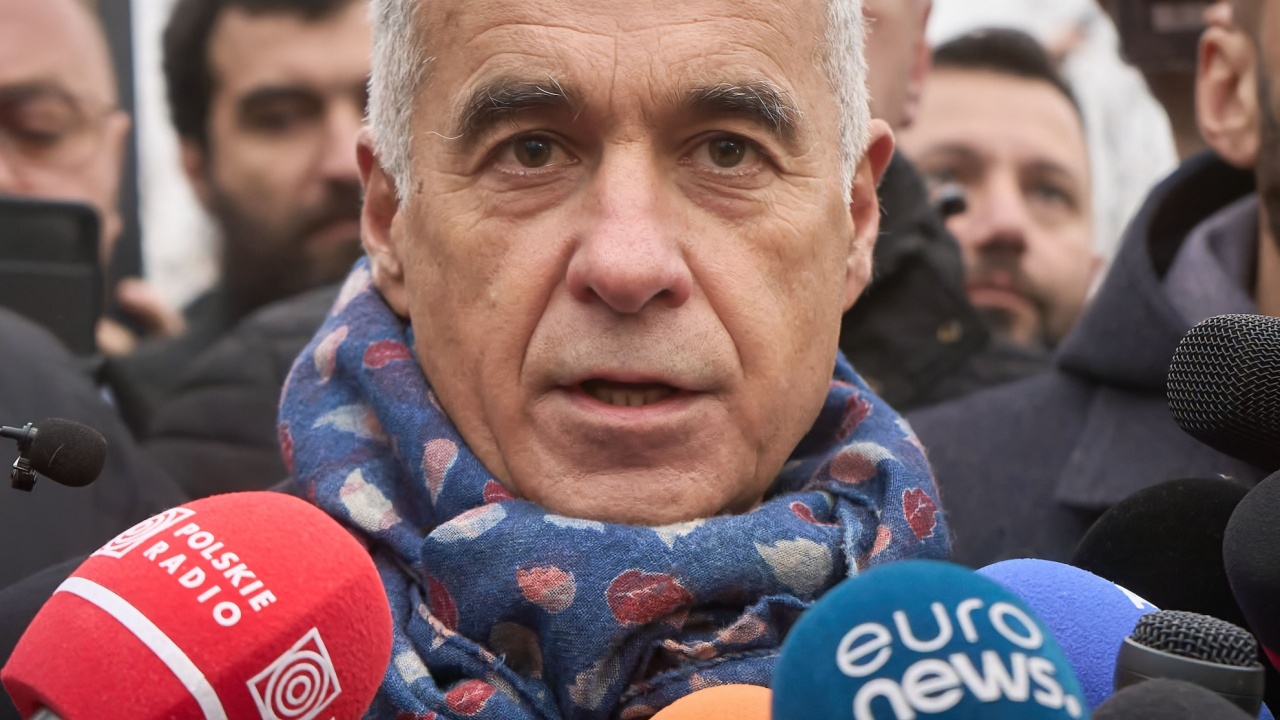
The ongoing constitutional coup in Romania escalated dramatically on Sunday when the country’s electoral commission announced that Călin Georgescu—the frontrunner in the upcoming presidential election and a staunch eurosceptic, NATO critic, and peace advocate—would be barred from running. This is the latest chapter in the Romanian state’s war on the independent populist candidate. It all began last November, when Georgescu emerged as the surprise winner of the first round of the presidential election. Shortly before the runoff, which Georgescu was tipped to win by a large margin, the country’s constitutional court, in an extraordinary and unprecedented move, declared the result invalid due to alleged Russian interference.
However, the intelligence dossier presented against Georgescu—“declassified” and published by Romania’s then-president Klaus Iohannis two days before the ruling—provided no clear evidence of foreign interference or even electoral manipulation. It simply pointed to the existence of a media campaign supporting Georgescu that involved around 25,000 TikTok accounts coordinated through a Telegram channel, paid influencers, and coordinated messaging. In other words, Romania’s top court annulled an entire election based on entirely unsubstantiated claims of foreign interference.
Even more incredibly, a Romanian investigative outlet subsequently revealed that the TikTok campaign used to justify the cancellation of the election was actually paid for by the ruling National Liberal Party—the very party that supported cancelling the elections, and from which the country’s former president, who played a key role in the whole affair until his resignation last month, originated. In other words, the whole operation was likely a deliberate ploy to give the intelligence services an excuse to overturn an election that the ruling establishment was set to lose for the first time since the fall of the Soviet-backed regime in 1989.
A new election date was set for May, but many questioned how the establishment could prevent a repeat of the November results—especially since the entire charade only strengthened support for Georgescu. The answer came with Sunday’s decision to bar Georgescu from running altogether. Particularly striking is the fact that the electoral commission’s ruling is based on the “foreign interference” allegations used by the constitutional court to annul the first round of the presidential election, even though these have been debunked. Unsurprisingly, on Tuesday, the constitutional court rejected Georgescu’s appeal against the electoral bureau’s ruling.
Indications that this was the endgame had already been revealed a few weeks ago, when Romanian prosecutors opened criminal proceedings against Georgescu on charges ranging from “incitement to actions against the constitutional order” to setting up an organization with “fascist, racist or xenophobic characteristics” to antisemitism. Indeed, Georgescu has expressed support for the pro-Nazi leaders of the country during World War II, referred to the Covid-19 crisis as a “plandemic,” and spoken of the existence of a transhumanist pedophilic cabal. But his campaign focused on economic issues (reducing the country’s reliance on imports, supporting local farmers, and ramping up domestic production of food and energy) and Romania’s geopolitical position (reducing the influence of international bodies like the European Union and NATO, and avoiding confrontation with Russia).
The reality is that the meteoric rise of this political outsider—Georgescu spent most of his career working for the United Nations as an agronomist—had nothing to do with Russian interference or his supposed fascist tendencies. Rather, his message appealed to voters facing economic hardship (Romania remains the second-poorest country in the European Union), fearful of the country’s potential “Ukrainization” in the form of direct military conflict with Russia, and disillusioned with the corrupt pro-Western elites who have governed for over two decades.
Thus, when smear campaigns by the mainstream media and established political parties failed to stem Georgescu’s rising popularity, the Romanian state mobilized nearly every institution against him—the courts, the police, and even the secret services. The objective was to eliminate Georgescu from the equation by any means necessary. And for now, they have succeeded.
This story represents a watershed moment not just for Romania but for Western democracy as a whole. There is reason to think that the Romanian authorities didn’t act alone but in coordination with, if not under pressure by, Washington—under the previous administration—and Brussels. The US State Department issued a statement expressing concern over Russian involvement in the election two days before the Romanian constitutional court annulled the election. Moreover, Romanian think tanks and NGOs that received funding through USAID, the National Endowment for Democracy (NED), and the State Department played a key role in championing the judicial coup, as the investigative journalist Lee Fang revealed.
Trump’s election has reshuffled the cards, with key figures from his administration—particularly JD Vance and Elon Musk—denouncing the annulment of last year’s election. In his speech in Munich last month, Vance criticized the Romanian authorities’ decision to “straight up cancel the results of a presidential election based on the flimsy suspicions of an intelligence agency and enormous pressure from its continental neighbors.” While Vance conveniently overlooked America’s own role, there’s no doubt that European governments were major players.
The European Commission, usually so vocal about rule-of-law issues, has remained oddly quiet about the whole affair. However, even former commissioner Thierry Breton, in an interview on the French radio RMC, suggested Brussels had played a role in the judicial process that led to the cancellation of the presidential elections. Moreover, the Commission has been engaged in propaganda-by-proxy campaigns in Romania (and elsewhere) for several years, using local NGOs and other organizations to push pro-EU narratives.
One example is the Blue4EU project, coordinated by the Babeș-Bolyai University in Romania, for which the Commission provided a budget of approximately $400,000 between 2004 and 2006 to “enhance young people’s critical thinking and resilience towards the current extremist and anti-EU movements” and engage them “to commit to a European future.” How is this not a form of foreign intervention?
Some European governments have been more explicit in their support for the campaign against Georgescu, framing it as defense of democratic integrity and judicial independence. The most prominent role was played by Emmanuel Macron’s government in France. Last December, just hours before the constitutional court annulled the election, the pro-EU candidate running against Georgescu, Elena Lasconi, posted a conversation with Macron on her Facebook page in which the French president issued several thinly veiled threats about the grave consequences a Georgescu victory would have for Romania. Moreover, just a few days before the electoral commission’s ruling against Georgescu, the French ambassador paid a visit to the president of the Romanian constitutional court, in which the two reaffirmed the importance of resisting “the penetration of populism into the decisions or rulings of a constitutional court”—an apparent reference to the criticisms of the court’s decision to annul the election results.
In short, to the extent that there was a foreign hybrid attack against Romania, it wasn’t waged by Russia—but by the transatlantic establishment, through foreign pressure, fabricated intelligence reports, foreign-funded “civil-society organizations,” and judicial subversion.
The reason foreign powers are so invested in a seemingly marginal country like Romania lies in its strategic importance to NATO and its role in the war against Russia. Romania’s 86th Air Base is where Ukrainian pilots receive training on F-16 fighter jets. The Mihail Kogălniceanu Air Base, on the Black Sea coast, is undergoing significant development to become the largest NATO base in Europe. This expansion aims to support NATO operations and strengthen the alliance’s presence in the Black Sea region and its control of Russia’s “near abroad.” The Western alliance can’t afford to allow mere elections to jeopardize Romania’s role as a NATO garrison.
The events in Romania represent a new and fateful step for Western societies that claim to be liberal and democratic. Elites no longer limit themselves to influencing electoral outcomes through media manipulation, censorship, lawfare, economic pressure, and intelligence operations. When these fail to achieve the desired result, they are increasingly willing to discard the formal structures of democracy altogether, including elections.
Therefore, what transpired in Romania should be seen as a warning sign of what may soon unfold elsewhere. Indeed, Breton openly stated that similar actions could be taken elsewhere—he was referencing Germany—if populists were at risk of winning the elections. It’s important to realize, however, that this anti-democratic drift has been a long time in the making. Indeed, one may argue that Western liberal-democratic states have been operating in a permanent state of exception for some time. The ease with which basic freedoms and constitutional guarantees were cast aside during the pandemic provided ample evidence of this. Ruling elites are able to do this because there is little in the way of organised mass resistance to challenge them.
For a brief 30-year period following World War II, the masses succeeded in leveraging democratic institutions to wrest a measure of economic and political power from entrenched oligarchic elites, but the material conditions that made that possible—first and foremost the organized power of labor—no longer exist. In retrospect, the brief period of (relative) popular sovereignty was an exceptional, geographically limited deviation from the historical norm, sustained by unique material and political conditions. Indeed, countries like Romania never even experienced that, having gone straight from communist rule to neoliberal post-democracy. The two pillars of the transatlantic alliance—the European Union and NATO—have advanced Europe’s anti-democratic trends, leading the charge in undermining democratic processes and suppressing popular self-determination.
What we are witnessing is not the “degeneration” of Western liberal democracy, an unfortunate deviation from the historical norm, but rather its logical conclusion. States that were once briefly responsive to popular demands have now returned to the function state institutions have had throughout most of capitalism’s history—preserving elite power at all costs.