Europe’s Anti-Democratic Turn, and Ours
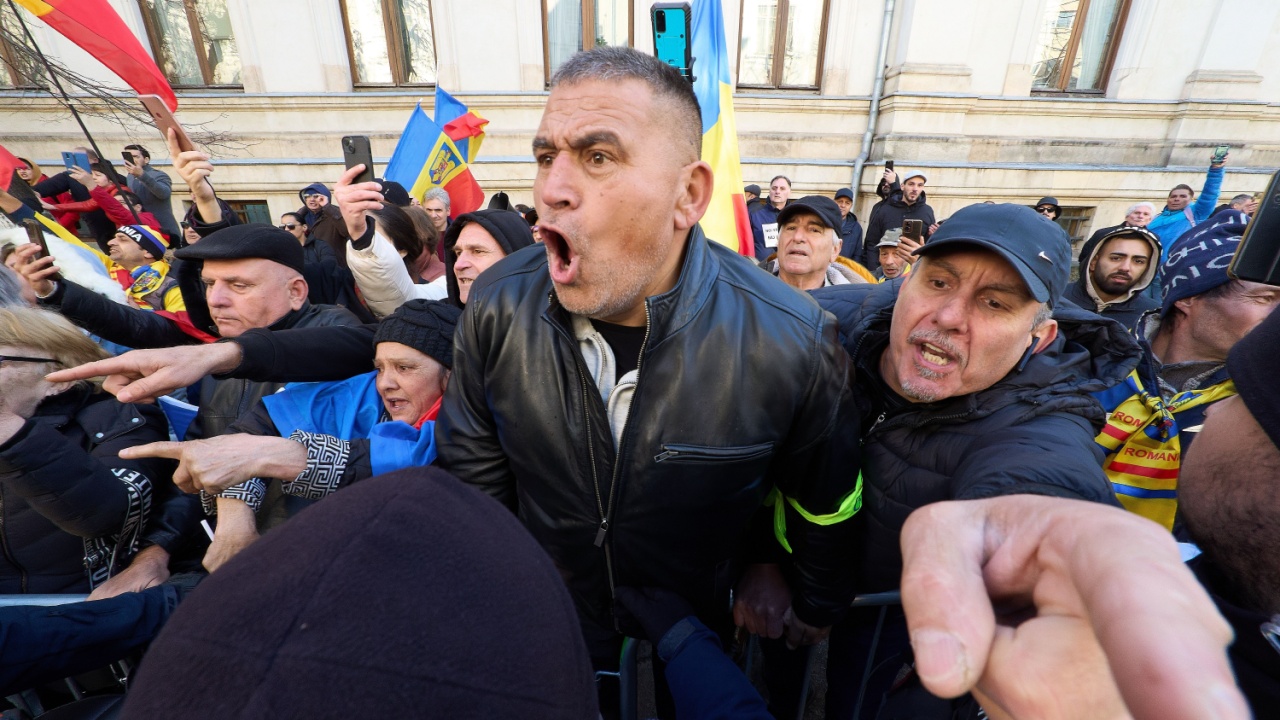
“Romania’s democracy has descended into farce” reads a headline at The Spectator World dated March 11, 2025. One could go farther. In December of 2024, the first round of the presidential election was nullified “by the Romanian Constitutional Court because the wrong candidate won, the economic populist and Ukraine war critic Călin Georgescu. The second round of voting was cancelled altogether, as a Georgescu victory seemed all but certain.
The cancellation was justified on the spurious grounds that Russia “interfered” in the election through modest expenditures on TikTok accounts. The “Russian hoax” trope seems to have international legs. The Romanian case of a presidential election being “cancelled,” and a winning candidate banned (and then brought up on questionable criminal charges), is the most extreme example yet of free institutions being subverted in the name of “saving” them, something that has increasingly become the modus operandi of the European Union and of left elites worldwide.
One does not have to agree with many or all of Georgescu’s views, including his apologetic views about Romania’s role during the Second World War, or deny his murky past as a Romanian apparatchik before and after 1989, to recognize that as a largely honorific president he would have posed no threat to fundamental freedoms but only to an entrenched post-Communist oligarchy. Nor are American conservatives obliged to admire him (and that is true of some other European “populists” as well). Nonetheless, Romania’s unfolding coup d’état, as the Romanian critic and commentator Titus Techera has called it in the pages of The Critic, provides evidence of the “EU’s creeping illiberalism” (a phrase coined by Gavin Mortimer in The Spectator World).
In a word, European elites are willing to countenance and abet authoritarianism in order to defend a self-serving version of “democracy.” Drawing on the French political philosopher Pierre Manent, Techera speaks of “the fanaticism of a center” that has grown ever more oligarchic, heavy-handed, and impervious to the concerns of ordinary people. These faux defenders of democracy do not hesitate to “cancel” the people when they get in the way of a nonnegotiable elite consensus. This is neither liberalism nor democracy. The fact that this is happening in Romania, which experienced a cruel and draconian version of Communist totalitarianism under the rule of Nicolae Ceausescu, makes recent developments even more tragic.
In the insightful article from Compact republished below, Thomas Fazi goes so far as to speak of the “death of democracy” in Romania. That is certainly the direction in which this post-communist country is heading, with initial encouragement from the Biden administration, President Macron of France, leading E.U. officials, and progressive-minded minded think tanks and NGOs, some funded by USAID and the now moribund National Endowment for Democracy. Fazi cites the case of Thierry Breton, a former European Commissioner, who enthusiastically told French radio station RMC that Brussels had played a key role in the cancellation of elections in Romania, and would be quite willing to do it again if, say, Alternative for Democracy won a free election in Germany.
As Fazi observes, “what transpired in Romania should be seen as a warning sign of what may soon unfold elsewhere.” With (initial) success in Romania, ruling elites are emboldened to undermine “democratic processes” and “suppress popular self-determination.” To be sure, they will get no support from the Trump administration. But the fanaticism of the faux center is alive and well in the U.S., too. Since “the future lasts a long time,” as Charles de Gaulle once wrote, true friends of self-government must remain ever vigilant. This means calling out what is happening in Romania, and making those who perpetrate this democratic takeover pay a real price.