America Passes Its Verdict on the Culture War
Editor's Note
In the choice between Kamala Harris and Donald Trump, American voters could see more clearly than ever before that they were being asked to choose not just between two political parties but between two distinct regimes. The Democrats, led (at least nominally) by Vice President Kamala Harris, did little to hide this fact, making radical social positions the keystone of their campaign. The result was a landslide victory for Trump and the Republicans.
But the war is not over. Frank Cannon, the founding president of the American Principles Project, dissects the election results and asks the important question: Will Republicans take the right lessons into the battles ahead?
The 2024 election is officially in the books. What was expected to be a nailbiter race turned into a relative romp, with former and future President Donald Trump racking up 312 electoral votes and a sizable win in the national popular vote. Despite all the talk of razor-thin margins, the victor was clear by the end of Election Night.
Much has been written already about the many factors that contributed to this result. But to discover the most important reason Trump won, one need not dig very deep. In the final weeks of the election, both the Trump and Harris campaigns focused their closing messages on the same general area of concern: cultural issues. And after being hit with an onslaught of ads on the topic, voters delivered a clear verdict: a rejection of left-wing extremism.
For Trump and Republicans, the effort to highlight Harris’s radical record on transgender issues turned out to be a brilliant move. On the whole, GOP candidates spent around $215 million on ads exposing Democrats’ support for policies that would allow boys in girls’ sports, men in women’s private spaces, and sex-change procedures for minors. In perhaps the most memorable ad of the campaign, Team Trump showed a clip of Harris from an interview promising taxpayer-funded sex changes for prisoners and detained illegal immigrants, before ending with the tagline “Kamala is for they/them, President Trump is for you.” According to an early analysis, ads on gender issues made up more than a third of pro-Trump groups’ airings in mid-October, outpacing all ads on the economy, immigration, or inflation.
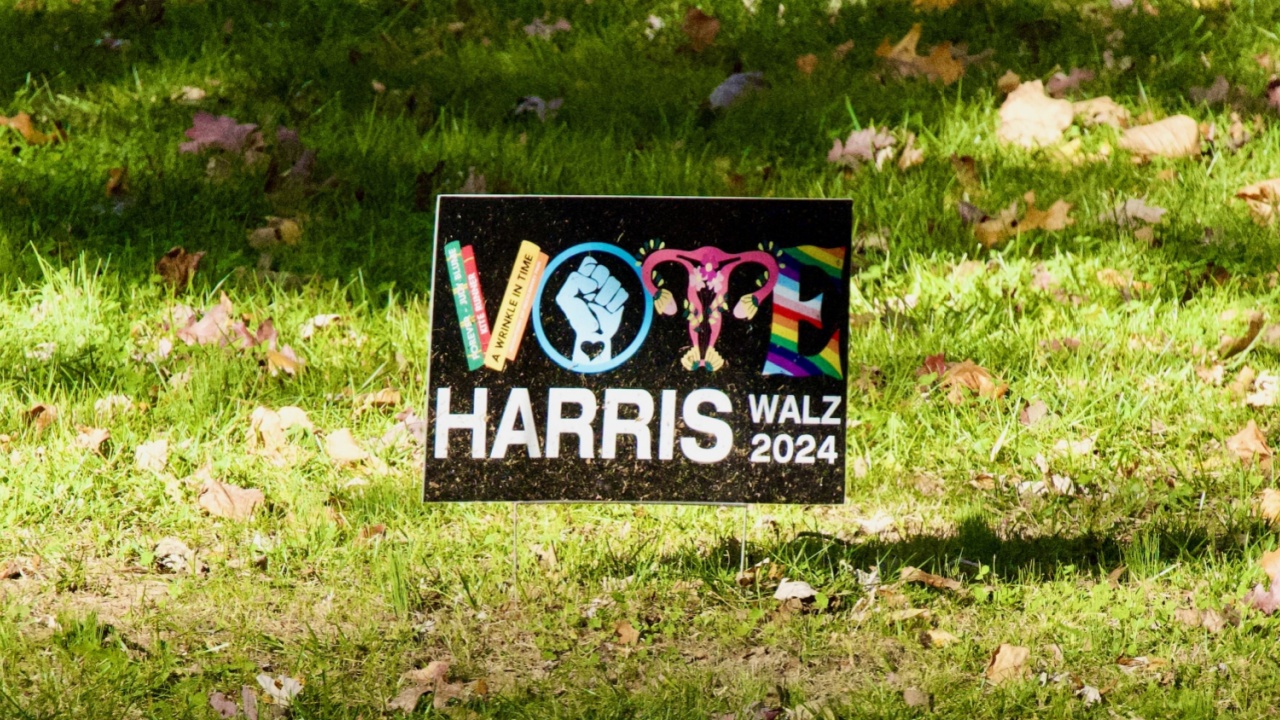
Meanwhile, Harris’s campaign focused its efforts in the closing days on highlighting her obsession with preserving abortion. By some estimates, Democrats spent at least $570 million on abortion this cycle, about a third of their total ad budget. And since Republicans didn’t respond, almost all voters heard on the subject was what Harris was saying about herself. Democrats expected this to play to their advantage, as it had in other recent elections. However, combined with Trump’s campaign focus, this strategy seemed to backfire, instead serving only to make Harris appear even more like a woke culture warrior and out of touch with normal voters.
In an even more ironic twist, the anti-woke backlash against Democrats came largely from the very groups the party claims to champion through these positions. On abortion, for example, Democrats have long insisted that their message especially resonates with women, and they were confident this alone would be enough to sink Trump. Instead, Trump seems to have done better with women than he did in 2020 or 2016 — or than Republicans did in 2012 or 2008 for that matter. In all, Trump put up the second best performance among women voters for a GOP presidential candidate in any election since the fall of the Berlin Wall.
Other groups the Democrats claim to champion similarly rejected what the left was selling. Trump won a higher share of black voters than any Republican presidential candidate in the past four decades, and a higher share of Hispanic voters than any in modern times. For many minority voters, this can also be tied to Democrats’ cultural extremism. Polls suggest that black and Hispanic voters are strongly opposed to the left’s transgender agenda, as are Americans across the demographic spectrum. In retrospect, it should not have been surprising to see so many of these voters repudiate that agenda once it was put on full display in this election.
Unfortunately for Democrats, it may not be easy to retreat from these positions even after they’ve been shown to be so unpopular. In recent days, the few Democrats who have spoken up in favor of moderating their wokeness have been pilloried by the left-wing activist class. For instance, when Rep. Seth Moulton (D-MA) suggested that he did not want his daughters competing against males in sports, nearly every prominent Democrat in his home state publicly rebuked him, and at least one of his staff members resigned. However, he was luckier than Texas’s Democrat Party Chairman Gilberto Hinojosa, who was forced out of the job after arguing for compromise on transgender issues.
With Democrats still wedded for the moment to their cultural radicalism, Republicans should continue to keep the pressure on. As Glenn Youngkin showed in 2021, there’s reason to believe that many more states can turn red if the GOP keeps hammering Democrats where they are most vulnerable. The strategy he helped pioneer in Virginia has proven to be successful in every race where it’s been tested since.
Like Youngkin, Donald Trump’s victory this year has provided the blueprint for resounding electoral victories nationwide. Now it’s up to Republicans to learn the right lessons.