The Totalitarian Impulse Then and Now
Editor's Note
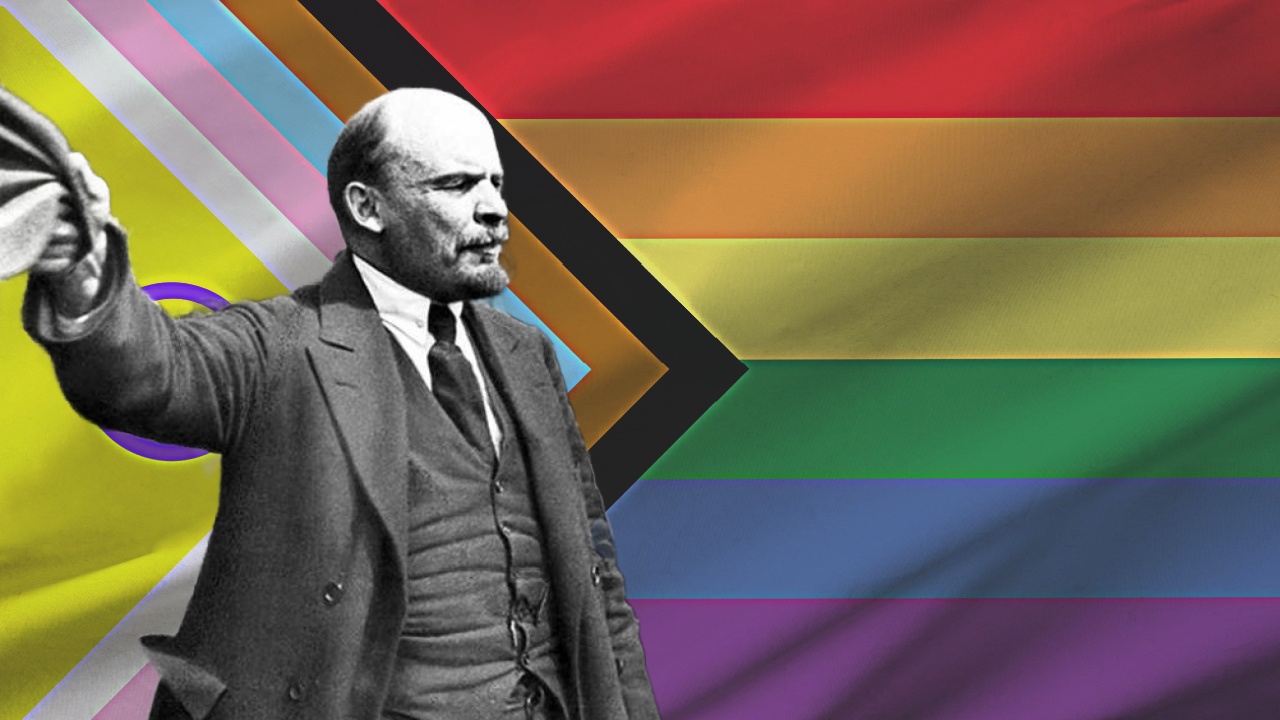
The advance of the destructive Left in America may not seem immediately parallel to the rise of totalitarian regimes in the 20th century, but Daniel Mahoney argues that the impulse driving both iterations of ideological fanaticism is the same: the replacement of standard moral distinctions between “good” and “evil” with the political distinction between “Progress” and “Reaction,” which ends only in the complete expulsion of evil from the world. The adoption of this impossible goal leads, as Mahoney notes, not just to the excesses of wokeness that we have already witnessed, but to mass violence and ultimately to despotism imposed in the name of liberation.
A generation on from the fall of the Soviet Union, the intellectual and political class in the democratic world still fails to grapple with the totalitarian episode that upended civilized life and politics for most of the twentieth century. That failure is not confined to history, nor to the territories touched by twentieth century despotism: It will have deeply deleterious effects on the future of Western democracy.
As I argue in my forthcoming book, The Persistence of the Ideological Lie: The Totalitarian Impulse Then and Now, the proper lessons to be drawn from humanity’s experience with ideological despotism have hardly been noticed or publicly acknowledged. The totalitarian regime built on the twin pillars of violence and lies and dedicated to the radical transformation of human nature and society — a truly “novel form of government,” as Hannah Arendt called it — too often has been confused with mere “dictatorship,” or (more inadequately) blamed on misplaced economic “planning.” Regimes that mocked the very notion of distinctions between truth and falsehood or good and evil are said by historians and political theorists of a certain stripe to have taken the notion of truth far too seriously. Liberal relativism, in this telling, is the antidote to totalitarian “monism.” This is a false inference that distorts the true meaning of both totalitarianism and constitutional democracy.
Others believed that the revolutions of 1989 and the fall of Soviet communism inaugurated “the end of History” with the triumph of electoral democracy, market economies accompanied by generous welfare states, ever-expanding “human rights” (however novel or spurious), and the near obsolescence of war and serious social strife. Such interpretations were naïve.
In short: the terrible illusions that led to the totalitarian tragedy largely went unexamined and unchallenged, with all-too-predictable consequences. The opportunity to come to terms with the mix of moral nihilism and ideological fanaticism that defined twentieth-century totalitarianism was largely wasted. As a result, new and increasingly virulent strains of coercive utopianism arose in the form of woke fanaticism, the new racialism, “settler colonial” ideology, gender ideology, and other efforts to divide humanity into permanently warring camps: innocent “victims” without moral or political agency, and “exploiters” or “oppressors” said to be beyond redemption.
Thirty-five years after the fall of European communism “the totalitarian impulse,” as I call it, dominates much of progressive politics and discourse, and has been institutionalized in major segments of civil society and in governmental institutions throughout the Western world. Its adherents confuse democracy (and the imperative to “save” it) with such dangerous modes of thinking.
In The Persistence of the Ideological Lie, I trace the totalitarian impulse back to the replacement of the once-venerable distinction between “good and evil” with the dangerous and ever shifting distinction between “Progress and Reaction.” In communist countries around the world, tyrannical elites prided themselves on their commitment to the “Progressive Doctrine.” They used it to justify the most draconian restrictions on freedom of thought and movement, elementary economic liberties, and the practice of religion, as well as to coerce, repress, and eliminate real and imagined “enemies of the people.”
The woke ideologues closer to home have not had the opportunity to build new gulags. But they and their allies viciously attack those who disagree with them, or oppose their summary ideological schemes, or who belong to the wrong class or race, as “reactionaries,” “racists” and “oppressors” who must be exposed, “cancelled,” and silenced in service of a fictive liberation where “racism,” “colonialism,” “sexism,” “homophobia,” and “transphobia” will be buried once and for all. The reader will readily notice the wooden language and the Orwellian ideological clichés that were a staple of the totalitarian ideology of old.
America remains a largely free country, but large parts of civil society — the universities, the entertainment world, prestige journalism, the “race-grievance” industry, and more — have been colonized by ideological zealots. Much of the left-liberal commentariat is unable to distinguish between the genocidal imperialism of Adolf Hitler and the various forms of democratic conservatism and patriotic-minded conservative populism espoused by a majority of American voters. This is a surreal world, marked by ideological zealotry and permanent moral panic. Let’s call it “totalitarian democracy”: democracy transformed into a weapon of war. Robespierre, it will be recalled, was the first of such totalitarian democrats.
In recent years, we have lived under the threat of encroaching woke despotism, though we have long been safe from full-scale ideological totalitarianism of the kind that devastated continental Europe. But that is no longer the case. Our intelligentsia — radical academics, professional activists, race hustlers, regime journalists, tech censors — more and more resembles the intellectual class in Russia between 1860 and 1917, one that sympathized with violent extremism and dedicated itself to fashionable nihilism.
Today, students and activists march in sympathy with the brutal barbarism and Jew-hatred of Hamas. In left-liberal circles, the deranged idiom of “settler colonialism” is ubiquitous and even de rigueur. Unlike the summer of 2020, when even some conservatives genuflected before extremist demands, or remained too timid or afraid to fight back against the madness, today half the country or more is fighting against the illiberal order established by woke religion, which combines cultural socialism, racialist moral panic, and totalitarian intolerance in the name of progress. The federal government and at least some of the people in the tech world (most prominently Elon Musk and a “reformed” Mark Zuckerberg) are now much less likely to punish alleged “misinformation” (an Orwellian formulation for being open to evidence and opposing the thought control imposed by the woke).
But as the distinguished British political scientist Eric Kaufman writes in his remarkable new book, The Third Awokening: A 12-Point Plan For Rolling Back Progressive Extremism, this pernicious secular religion is deeply ingrained in education at every level, in key governmental institutions, and in the thinking of two or three generations of Brits and Americans, especially demi-intellectuals and young women. Moreover, as illiberal as it seems, the progressive extremism of the destructive Left is as much a perverse extension of liberal categories as a repudiation of it, defined by a distorted “liberal” emotional attachment to groups deemed “victims” even as it repudiates liberal principles. For a century or more, many liberals have seen “no enemies to the Left” and have seen in murderous totalitarianism the promise of “liberation.”
In addition, Kaufman rightly criticizes the perverse economism that lies at the heart of mainstream political commentary and punditry. Civilization will only be preserved if “the conservative and moderate majority” in our Western societies places “culture front and center and spare[s] no effort to win the battle of ideas.” On that, everything finally stands or falls. We cannot sit back and wait for wokeness to simply peter out or depend exclusively on the anti-woke policies of a new conservative administration.
We must return to the enduring lessons to be learned from the totalitarian tragedy of the twentieth century. We should look to the great Russian anti-totalitarian writer Aleksandr Solzhenitsyn and his masterwork The Gulag Archipelago. In words of wisdom for the ages that also speak with rare force to our ideologically charged historical moment, Solzhenitsyn writes about what he learned from years of confinement in Soviet prisons and camps:
The line separating good and evil passes not through states, nor between classes, nor between political parties either, but right through every human heart — and through all human hearts. This line shifts. Inside us, it oscillates within the years. … It is impossible to expel evil from the world in its entirety, but it is possible to constrict it within each person.
What is the totalitarian impulse but the “metaphysically mad” desire to expel evil from the world in its entirety, rather than learning to restrict it within ourselves? The first approach gives rise to limitless violence and lies, to hatred and conflict on a massive scale. The second, more decent approach allows free people to live together in liberty and under law. We must begin to teach this all-important lesson in courage and truth to the young.