The Long Game in the Legal Academy
Editor's Note
In the context of America’s cold civil war, political conflict increasingly takes institutional rather than mere electoral form. Law schools occupy a pivotal position in this struggle, shaping the professional class that staffs courts, agencies, and executive administrations across decades. This essay from Scott Yenor proffers the Antonin Scalia School of Law as a case study in conservative institution-building, asking what its relative success reveals about how power is accumulated, maintained, and reproduced in a deeply polarized regime.
A decade ago, it was a miracle when a conservative emerged from a top-thirty law school. Indeed, the American Left dominates nearly all of them. That is a troubling reality when one considers that these schools produce default-leftist lawyers to staff bureaucracies, the judiciary, and future administrations.
By most measures, fewer than one in five law professors identifies as conservative, while more than nine in ten dollars in law-faculty political giving flows to Democrats, according to ideology and campaign-donation analyses by political scientists Adam Bonica, Adam Chilton, and Kyle Rozema. That imbalance would matter less if law schools were culturally marginal, but lawyers are dramatically overrepresented in government — roughly eight percent of the profession works directly in public service, and Bloomberg Law has found that a majority of senior White House staff in recent administrations hold law degrees.
Conservatives have mostly responded to this situation by establishing organizations like the Federalist Society and fellowship programs such as Blackstone or the Marshall Fellowship at Claremont to attract, educate, and credential conservative lawyers. These are prudent adaptations to bad circumstances.
But making the best of a bad situation isn’t enough. Where will future conservative lawyers come from? What would a conservative lawyer look like? Can the Right produce lawyers systematically through institutional control?
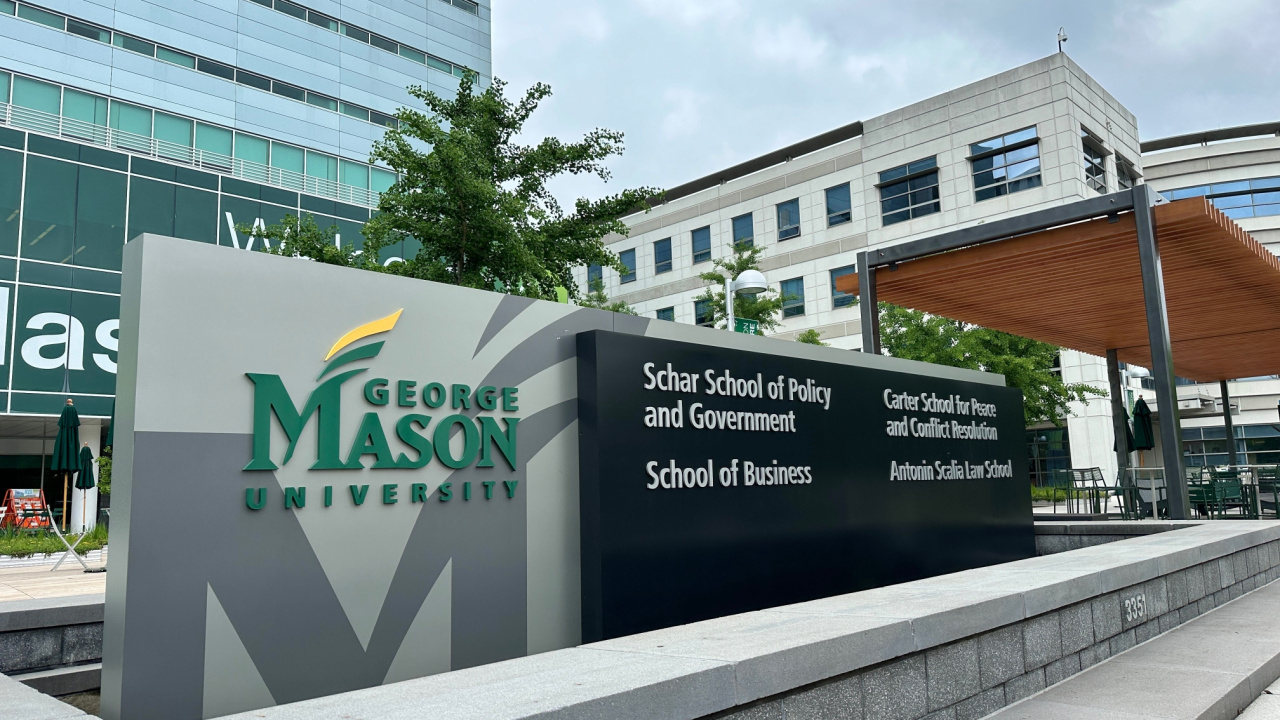
To my eyes, the Right’s best answer to the law-school question has been the Antonin Scalia School of Law at George Mason University. It is a rare conservative institutional conquest that is likely to produce conservative lawyers. Indeed, it has been successful enough that the Left has taken aim at it repeatedly. The New York Times is scandalized, as are Inside Higher Education, The Week, and others.
The school must be doing something right. Conservatives should be paying attention.
The Scalia Law School has structural advantages worth noting. The Mercatus Center, a libertarian think tank, was established on campus in 1980. The university became home to Nobel laureate James Buchanan, Gordon Tullock, and the Center for the Study of Public Choice after 1983. In 1986, Henry Manne — a devotee of public-choice methods in law — was recruited from the University of Chicago to serve as dean of George Mason Law. He established the Law and Economics Center and implemented a curriculum designed to attract conservative and libertarian faculty. The law-and-economics approach, which emphasizes how incentives created by laws structure behavior, was George Mason’s distinctive trait for decades.
Much changed in 2015, when Henry Butler, the new dean, formed a partnership with Federalist Society leader Leonard Leo to reorient the school as an alternative to left-dominant law schools. The resulting plan combined fundraising for naming rights and endowed chairs, the creation of academic centers devoted to conservative constitutional causes, the development of prestigious placement opportunities, intentional hiring aligned with the school’s mission, and the cultivation of strong ties to Washington’s conservative legal establishment.
The effort began with renaming the school the Antonin Scalia Law School (ASLS) in 2016, following a $20 million anonymous donation — widely believed to have come from Barre Seid — and a $10 million donation from Charles Koch. These gifts also established two new centers: the Liberty & Law Center, with twenty affiliated faculty members, and the C. Boyden Gray Center for the Study of the Administrative State, with many additional affiliates. Koch also endows chairs at ASLS. Separately, the estate of Allison and Dorothy Rouse donated $50 million to endow thirteen chairs promoting what it described as “conservative principles of governance.”
In one sense, ASLS’s approach resembles an old Steve Martin joke. “How can I be a millionaire and never pay taxes?” he asks. Answer: “First, get a million dollars” — spoken very quickly — “then, when the taxman comes, tell him, ‘I forgot.’” How one gets the million dollars is left unsaid. How does one build a conservative law school? First, get $80 million, then build a conservative law school.
But conservatives have often lacked the strategic sense to build mission-oriented institutions, even when generous donations were available. ASLS’s centers create a gravitational pull within the law school, designed to promote traditional American liberty — not merely economic liberty — and consent-based government by challenging administrative-law precedents. On this score, personnel is mission.
The Liberty & Law Center and the Gray Center help recruit aligned faculty. The 2019 Rouse gift similarly strengthened ASLS’s missional culture. Before that donation, the school had forty-four tenure-track faculty positions; the Rouse endowment created thirteen new ones. Without purging liberal professors, the relative proportion of left-leaning faculty declined, and conservative control of faculty hiring could, at least in theory, proceed. With this gravitational pull, ASLS made several missional hires in law and economics, including J. Shahar Dillbary in 2023 and Donald Kochan and Ken Randall in 2020.
Equally important are efforts to recruit top-flight students. Rankings matter in legal education. In 2023, ASLS ranked 31st overall in U.S. News & World Report and twelfth among public universities. The school also maintains a robust placement office, headed by Rob Luther, a former associate counsel to President Trump who co-managed the judicial selection process. Luther also served as counsel to the Senate Judiciary Committee and as a law clerk to Judge Daniel Manion of the Seventh Circuit.
Luther’s ability to leverage contacts within the federal judiciary has made it possible — though still uncommon — for ASLS students to secure placements over students from more prestigious, higher-ranked schools. Eight of its 146 graduates were federal clerks in 2022; twelve of 156 in 2021. By comparison, Harvard placed seventy-seven clerks out of 611 graduates in 2022, and Stanford forty-eight out of 189. In 2022, ASLS produced a higher percentage of federal clerks than similarly situated schools such as Fordham, which placed ten out of 375. ASLS now ranks first in the percentage of graduates who obtain federal clerkships.
ASLS has also taken advantage of its proximity to Washington, D.C., building relationships with sitting Supreme Court Justices Clarence Thomas, Neil Gorsuch, and Brett Kavanaugh, each of whom has taught a class at the school. These relationships not only strengthen the clerkship pipeline but also provide tangible educational opportunities for students.
The Times and other outlets have attempted to turn the school into a scandal, but nothing described is extraordinary if a single standard governs the conduct of Supreme Court justices. Justice Elena Kagan has spoken at ASLS events without provoking concern from the Times or other liberal outlets, and those same outlets remain silent when liberal justices teach courses at Harvard or Yale Law School, as they regularly do.
Perhaps, some might argue, ASLS embraces approaches to the law that amount to controlled opposition to the liberal state. Law and economics has adherents on both the right and the left, and it does not constitute a full-scale confrontation with today’s legal establishment. Ideological opponents — including proponents of behavioral “nudging” — can appropriate its methods. Still, limiting the influence of the administrative state remains at the heart of conservative political ambition. ASLS pursues this aim within defined bounds, such as challenging Environmental Protection Agency or Occupational Safety and Health Administration rules, rather than mounting a more fundamental confrontation with the civil rights state, the national security state, or the administrative regime as a whole.
However this may be, ASLS is not merely a venue for the free exchange of ideas. Its faculty is committed to free speech, but the school hires, fundraises, and recruits with its law-and-economics framework and constitutional ambitions firmly in mind. The sufficiency of that mission matters. Without these missional practices, ASLS would likely have become another failed conservative attempt at institution building.
Other law schools may pursue different ambitions and employ different means. A school such as Texas A&M, rooted in a conservative tradition within a red state, might establish centers dedicated to reshaping immigration law, constitutionalizing aspects of the national security apparatus, or developing a more robust understanding of freedom of association. ASLS points the way on the question of means, but other iterations — with different goals — should be high on the to-do lists of red-state legislatures and ambitious private institutions