Safe Passage Out of Tyranny?
The Total State: How Liberal Democracies Become Tyrannies, by Auron MacIntyre, Regnery, May 2024, 208 pages.
America is not governed the way you think it is. That, in a phrase, is Auron MacIntyre’s message.
A popular political commentator in New Right circles, MacIntyre combines a capacious political imagination with lucid explanations of heterodox thinkers. The Total State: How Liberal Democracies become Tyrannies is a smart polemic, excoriating movement conservatism for its failure to understand our regime’s degeneration. But if the book is meant to demonstrate the proposals of the New Right for reversing this, a careful reading yields a surprising conclusion: these are liberal-conservative proposals, very much in the mainstream of the American political tradition.
The Total State targets the idea that liberal democracies have developed an impermeable institutional system, which banishes unfreedom forever. As one Eurocrat said in 2022, “We have built a garden. Everything works…most of the rest of the world is a jungle.” It’s easy to puncture this hubris, but the deeper problem with the garden-variety liberal story is that it has enabled the state to wield unprecedented levels of power over citizens, levels that tyrants of old could only dream of. This is the crux of MacIntyre’s challenge to American conservatism. If you think that the Bill of Rights, the separation of powers, and checks and balances suffice to keep tyranny at bay, then you are part of the problem. You may even be defending the expansion of the state you purport to reject.
To explain how modern liberal democracies really function and how the new kind of tyranny works, MacIntyre snubs the standard texts of the liberal-conservative canon. Alexis de Tocqueville appears just once. Instead, MacIntyre draws from a host of thinkers who would never make it into a conventional conservative curriculum, including Carl Schmitt, who coined the term “total state” to describe the breakdown of a system where the state’s power is limited by an independent civil society. In the total state, this kind of society collapses, and the state consumes every domain.
In describing this regime, Schmitt argues that we cannot equate the state with politics. Distinguishing between friends and enemies — Schmitt’s understanding of the essence of politics — happens in other social domains. The rise of informal politics in these domains — think of the domain of “science” during the pandemic, where only a few experts were authorized to speak on its behalf and wield power accordingly — upends the liberal democratic paradigm.
MacIntyre picks up that insight, focusing his analysis on the rise of informal power enhanced by technological change. The founders, along with liberals, worried about formal power: the abuse of the state. They designed institutions to counteract that threat. But informal power is just as dangerous. Modern democracies invite rule by informal power by replacing the king with the people. Popular sovereignty replaces real sovereignty. Public opinion becomes king, giving unprecedented power to those who can control the flow of information. They use that power to dictate what counts as suitable and unsuitable action, speech, and thought. Liberal democracy transformed into a theocratic oligarchy in which formal and informal networks of power (“The Cathedral”) collaborate to manufacture consensus, instilling commitment to a new civic religion. The total state, then, is not so much a state per se but the fusion of these formal and informal networks, whereby it becomes harder to distinguish between the exercise of state power and the exercise of social power. As Schmitt writes, the total state “results in the identity of state and society.”
The digital information revolution takes all this to the next level. The state can instantly reach throughout all social domains, using the authority of informal networks to facilitate the large-scale management of dissent. In 2020, in the name of science, information technology enabled the state to enforce lockdowns, using QR codes and location trackers on smartphones to enforce quarantine and vaccination requirements. But the most radical shift was how it forced citizens to cooperate, becoming advocates for the new cult. Because of the internet, “the modern citizen lives in a panopticon of coworkers, family, friends, and superiors,” and the pressure is on to act correctly all the time. Citizens must use their voices to promote the new civic, therapeutic religion, posting “Black Lives Matter” in June 2020, not “all lives matter.” We follow social cues and mimic pieties to avoid upsetting others. Here MacIntyre turns toward a more traditional thinker, C.S. Lewis. The total state is an anthropological project, refashioning us to become “men without chests.” Our vitality is hollowed out. We are broken. We become subjects fit for manipulation, unfit for republican government.
All this is a harsh message for those who hold out for the future prospects of republicanism. For MacIntyre, there seems to be an iron law that mass democracy degenerates into oligarchy, and a new technological ecosystem turns that into steel. Tyranny is just too easy; with a simple hack, the state can put a policeman in your pocket and arrest you for what you say in your groupchats. The implication of MacIntyre’s analysis is that republican constitutional government must go extinct. Faced with that evidence, the notion that a republican people could rally to disrupt or dislodge the total state would be delusional.
Unlike other New Right radicals, MacIntyre never endorses this thesis. In the final sections of the book, he argues along much more orthodox liberal-conservative lines. The problem isn’t the Constitution per se; rather, it’s the conviction that the Constitution can provide a special key for locking the door against tyranny forever. “A constitution,” MacIntyre writes. “is not a piece of political technology that solves the problem of a fallen humanity.” It is the product of unwritten custom: “Human identity is not forged through a set of absolute freedoms or rights; it’s found in the limitations that culture and circumstance impose on the individual.” This is, as MacIntyre notes, Joseph de Maistre’s case for the priority of unwritten constitutions. But it is also Edmund Burke’s.
MacIntyre is bold enough to discuss the prospects of Caesarism in the United States; he sees that America has already had a version of this phenomenon. But constituent power won’t appear like a “flash of lightning,” as Donoso Cortés put it, with a military man seizing power: “the United States seems far more likely to see another Lincoln or FDR before it gets a Francisco Franco.” Much depends here on how MacIntyre understands the actions of those two Americans, but at the very least, he implies that for American Caesarism to succeed, it must obey constitutional pieties. If even America’s Caesars bow to the constitutionalist civic religion (we recall from Maistre that this unwritten constitution is what really matters), then that suggests the constitutionalist civic religion still exists. Its form involves a defense of equality, because, as MacIntyre observes, progressive double standards mean they don’t care about equality. Put in the Declaration’s language, they have repudiated the civil religion of “all men are created equal.” MacIntyre suggests that the political divide in today’s America is between those who hold to the old creed of equality and those who repudiate it. Many conservatives share the same stark assessment, though it is often quickly qualified with exhortations to national unity. MacIntyre, by contrast, stresses the conflict’s essentially political character.
Yet the way through this conflict is not “some glorious and sudden act of revolution, but the acceptance of responsibility and implementation of careful discipline.” Repudiating revolution, MacIntyre turns to Tocqueville’s prescriptions: hence his single but significant mention. Faced with the onset of tutelary despotism, the solution is reconstructing community associations to displace the pretensions of the total state. With all the passion of an ISI panel, MacIntyre exhorts us toward localism to recover lost liberties, rebuild broken communities, and achieve the common good.
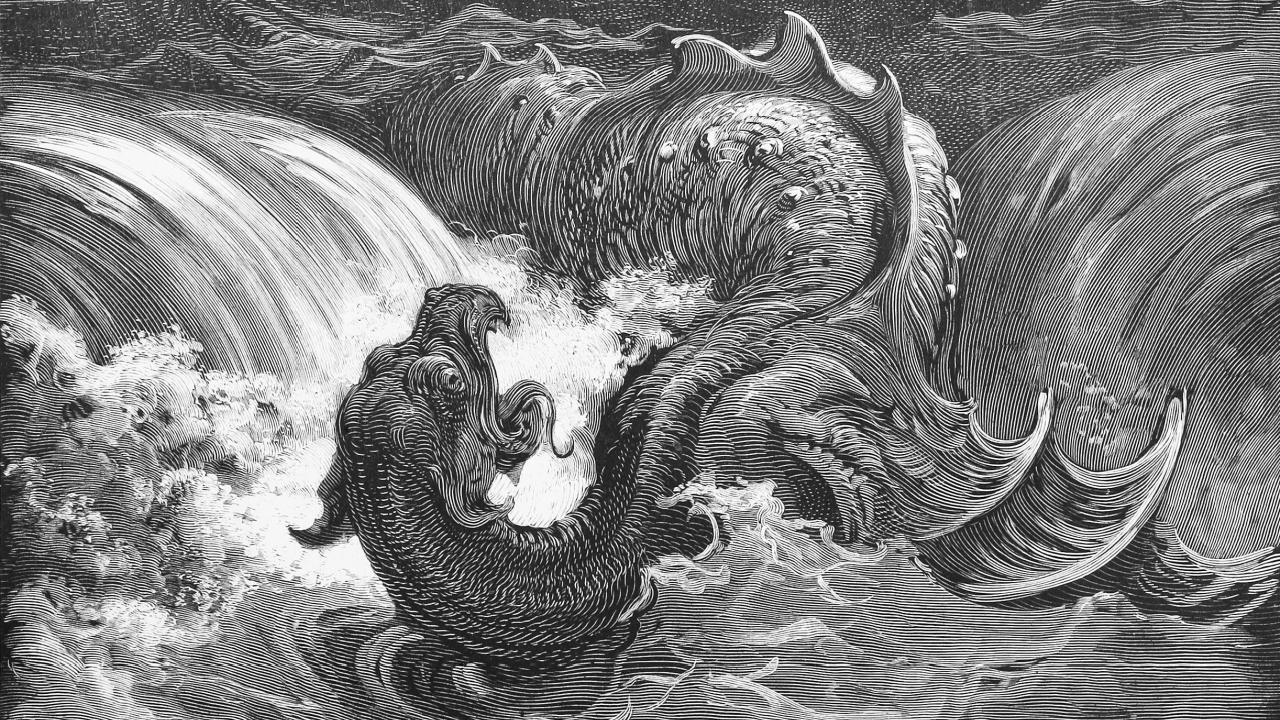
There is, then, straightforward but noble patriotism underlining MacIntyre’s particular blend of New Right thought. He shows Americans that you can sail on the open seas alongside fearsome, Schmittian leviathans far outside the mainstream, yet survive and steer a course toward calmer constitutionalist waters. Other radicals might find that sudden tack away from stormy adventures frustrating. But Americans can be reassured. Reading Maistre and Schmitt helps us find a safer passage home.