Pearl Harbor and the Art of Peace
Editor's Note
This story appears annually at tomklingenstein.com on December 7, in commemoration of 250 years — and counting — of American independence.
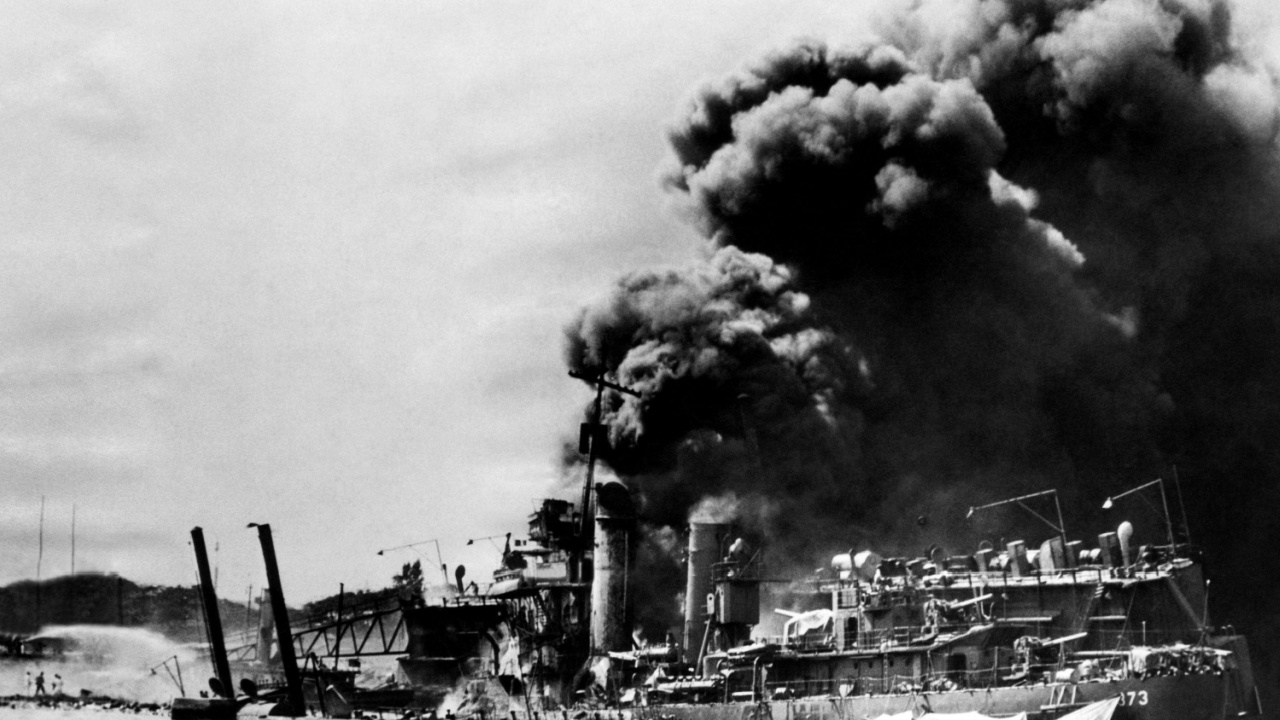
It has always been the case and will always be the case that some nations will choose to make war for what they think is their advantage. On December 1, 1941, Emperor Hirohito met with Prime Minister Hideki Tojo and his cabinet. Tojo argued that Japan’s aims could not be achieved peacefully, and the cabinet voted unanimously for war. So, at 7:55 a.m. Hawaiian Local Time, on December 7, Japanese dive-bombers began their attack on the U.S. Pacific Fleet anchored at Pearl Harbor on Oahu Island, Hawaii. Simultaneously, Japan attacked Hong Kong, Singapore, Malaysia, Thailand, and the U.S. territories of the Philippines and Guam.
December 7 thus became one of many days in the American calendar that inspire reflection on the most violent and determinative human event: war—and the art of war that aims to control and direct that most uncontrollable human undertaking.
It is part of the human condition that God gives the world to men in common, but every political community must begin by acquiring and establishing dominion over a particular part of the world. Next to the people themselves, the land they live on is the most fundamental and necessary material condition of political life. The rest of political life depends upon the acquisition and defense of this particular territory, and the need to preserve this territory is never absent from political life. This is why the first act of politics is the exercise of the different and unequal faculties of acquiring territory, and the art of acquiring territory is a species of the art of war.
Because politics must always be concerned with acquiring and preserving the material necessities of political life, like land, the art of acquisition is often equated with the art or science of politics itself. And this art of acquisition contains within itself no intrinsic limiting principle. That’s why Niccolo Machiavelli insisted that “a prince should have no other object, nor any other thought, nor take anything else as his art but the art of war and its orders and discipline.”
But the statesmen who founded America were not Machiavellians. They held that politics, though it must always be concerned with war and other coercive necessities, is not reducible to such concerns. Even Sun Tzu, that great teacher of the art of war, insisted that “[t]hose who excel in war first cultivate their own humanity and justice and maintain their laws and institutions.” States devoted to war and conquest breed citizens equally driven to seek domination over their fellow citizens; among such citizens there can be no justice or common good. This is why the greatest teachers of statesmen have always taught that war is conducted for the sake of peace. And the political art, though it may often find the art of war indispensable, is essentially an art of peace.
Political life of necessity begins with the acquisition and defense of territory, but it does not end here. Even in such beginnings statesmen find it necessary to contemplate the “ends” for which political life is begun. When the American founders were still struggling to establish physical control over their newly acquired territory, they were deeply concerned with a loftier question: whether republican liberty could thrive in such an extensive territory as the United States.
If the art of securing and defending territory is necessarily the “first part” of the statesman’s art, it is first only with respect to urgency or necessity. The greater part of the statesman’s concern lies on higher ground. He must consider how a nation may so conduct itself that the encroachment of another power upon its territory could never in truth be said to be a blessing to the people of that land; so that whatever territories and people should fall within its dominions may truly be said to be better off because of that fact. He must seek to arrange the political affairs of his land so that the citizens can never with justice wish for the displacement of their country’s rule by that of an enemy. Such a nation will be neither self-aggrandizing nor self-sacrificing. It will defend such dominions as its “interest, guided by justice, shall counsel.”
It was good for America and for the world that Tojo (and Hitler and Mussolini) did not win their wars; and it was good that the United States of America did win its wars. One of the greatest tributes to the United States is that it was better even for the people of Japan, Germany, and Italy that their governments did not win their wars. Victory over these countries by the United States was a benefit not just to America and the world, but to the people of those countries. Stalin’s associated victory over the same countries and others gives occasion for reflection on the tragic limits of the art of politics.
The world will never be rid of war. Let us take the occasion of days like this to pray that we may deserve to win them and that in victory the art of peace will prevail.