Inside the Illegal Immigration Machine
Editor's Note
Revolutions often do not announce themselves. They build networks, seed rhetoric, and turn policy into theater. Immigration has become one such theater, where identity politics is the costume and demographic change the stage. What looks like advocacy for immigrants often masks a radical project — part of a cold civil war between Americans who wish to preserve their country and a destructive Left determined to tear it down.
This investigative report from Kyle Shideler reminds us that illegal immigration is not merely a policy dispute but a political strategy. The Hispanic vote is cultivated as both shield and sword: mainstream legitimacy for the radicals, and the muscle to advance them. Conservatives must know that immigration is not simply a matter of policy; it is a weapon in a larger and more decisive struggle.
“Who is behind America’s illegal immigration machine?” A question many Americans ask but rarely hear answered, obscured by a web of activist groups and political theater. For decades, the American Left has wrapped radical activism in the language of identity politics, presenting it as advocacy for Hispanics or immigrant communities. In reality, many of these groups function merely as vehicles advancing the agendas of foreign-aligned radicals.
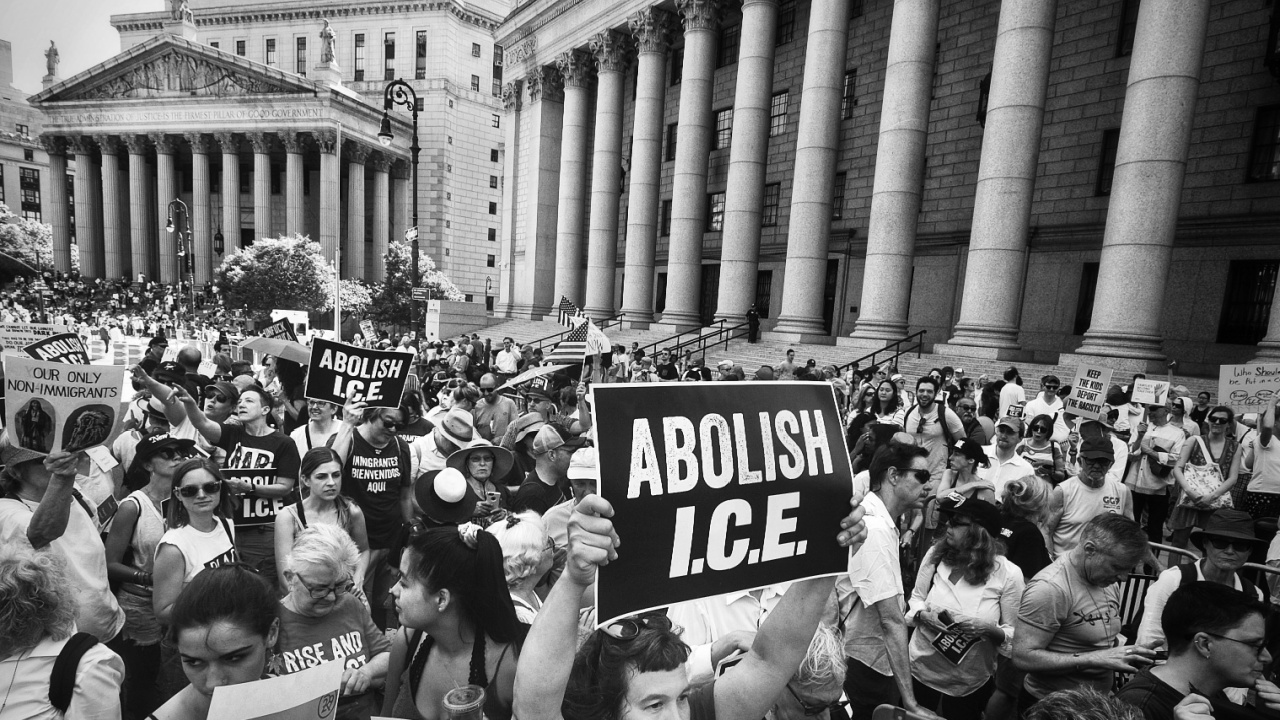
Demographics have turned these groups into some of the Left’s most effective weapons. Hispanics represent the fastest-growing minority group in the United States, and conservatives, wary of alienating voters, have grown hesitant to confront these organizations directly — making them doubly valuable to the Left. They serve two purposes at once: generating agitation in the streets and presenting themselves as the voice of a powerful electoral bloc. And these groups don’t just agitate; they stage. Every protest is a performance, calculated for cameras and scattered throughout sympathetic media.
Following this summer’s Los Angeles riots (targeting Immigration and Customs Enforcement officers), the funding question surfaced yet again. Frustrated conservatives’ hubbub even reached the halls of Congress, where Sen. Josh Hawley (R-MO) issued a series of letters to groups singled out as alleged instigators — namely the Coalition for Humane Immigrant Rights of Los Angeles (CHIRLA), the Party for Socialism and Liberation (PSL), and Unión del Barrio.
But the funding question only scratches the surface. To truly understand these groups, we have to follow not just the money but the ideas and networks that sustain them.
The first and most prominent example is CHIRLA, born out of Los Angeles’s activist priesthood and radical organizing tradition. CHIRLA’s founder and first director was Father Luis Olivares, an organizer for the radical Left and longtime priest of Our Lady Queen of Angels Church, better known as La Placita. A devotee of the Saul Alinsky-style organizing method and close friend of United Farm Workers organizer Cesar Chavez, Olivares was known as a hero of the “Chicano Movement” and a leader of the Sanctuary Movement of the 1980s.
The Chicano Movement, founded in the 1970s and modeled after the Black Panthers, views Americans of Mexican heritage as an indigenous people native to the American southwest — and entitled to a separate nation state, known as Aztlán. The Chicano Movement was strongly influenced by the Communist Cuban Revolution, and several Chicano leaders travelled to Cuba as part of the Venceremos Brigades (VB), the Cuban intelligence program to recruit U.S. students as long-term assets. Current Los Angeles Mayor Karen Bass — who has extensively supported protests against the Trump Administration’s immigration enforcement agenda — was a well-known and high-ranking VB member, if that tells you anything.
Small wonder, then, that the next wave of resistance — the Sanctuary Movement — would be driven by many of the same ideological currents. Led by a handful of left-wing activists, including clergy, the Sanctuary Movement was the first organized resistance to enforcement of immigration laws, emphasizing civil disobedience and deliberately harboring illegal aliens, almost exclusively Central Americans fleeing civil war between U.S.-backed governments and Soviet-backed Communist guerrillas.
Indeed, the Sanctuary Movement was less about immigration law than about turning the refugee crisis into a tool to undermine President Reagan’s efforts to curtail communism within Central America.
A committed proponent of Marxist Liberation theology, Olivares cultivated ties with the Sandinista regime of dictator Daniel Ortega in Nicaragua and openly supported communist guerrilla groups across Central America, including El Salvador’s FMLN. He worked closely with the Committee in Solidarity with the People of El Salvador (CISPES) — a group founded by Communist Party USA members in collaboration with Cuban intelligence to serve as a front for the FMLN and funnel material aid to its fighters. One of its founders, Sandra Pollack, was herself a CPUSA member and among the first “brigadistas” dispatched to Cuba through the Venceremos Brigade.
This was clearly Olivares’ defining interest: upon his death in 1993, an FMLN flag was even draped over his coffin.
CHIRLA continues to work closely with the Central American Resource Center (CARECEN), founded by former CISPES Executive Director Angela Sanbrano. As of right now, the two organizations are jointly suing the Trump Administration to preserve federal funding to sanctuary cities.
If CHIRLA represents the institutional face of this network, Unión del Barrio embodies its militant edge. Unión del Barrio is an explicitly Chicano movement organization, founded in 1981 by longtime activist Ernesto Bustillos as an “advanced political organization.” From the start, it cast itself as a vanguard “revolutionary party” dedicated to the national liberation of “Nuestra América” (literally “Our America”).
Two years later, in 1983, UdB joined forces with CISPES to launch Chicanos in Solidarity with the People of Central America (CHISPA), a coordinated campaign to back El Salvador’s FMLN and the broader “liberation struggle” of la raza. Over time, UdB expanded its alliances. It became a major supporter of the anarcho-Marxist Zapatista guerrilla movement, and by 1997 was formally inducted into the Zapatista front organization FAC-MLN (the Broad Front to Build the National Liberation Movement).
Today, the group is especially known for its “autonomous community defense” programs, reflecting its adoption of Zapatista-style tactics at the local level. In practice, that means street patrols, militant demonstrations, and neighborhood organizing efforts designed to operate outside the authority of U.S. law enforcement. UdB literature openly frames these activities as training grounds for “liberated zones,” regurgitating the rhetoric of Latin American insurgent movements. They even see these neighborhood patrols as theater of resistance, designed as much to broadcast defiance as to enforce it.
UdB soon carved out a role in the Sanctuary Movement, teaming up with CHIRLA and other activist outfits — including A.N.S.W.E.R., the street-organizing arm of what would become the Party for Socialism and Liberation — in a string of follow-on campaigns. One of their biggest fights came in the 1990s, when they mobilized against California’s Proposition 187, the ballot initiative that barred state services for illegal immigrants. That fight helped set the stage for the rise of California’s “sanctuary” policies, which would later spread nationwide.
Given UdB’s roots in CISPES and its track record of cheering on communist guerrillas, it’s little surprise the group has remained an outspoken defender of Cuba’s communist regime and a loyal backer of the Bolivarian Alliance for the Peoples of Our America (ALBA) — the Cuban-Venezuelan bloc that powered Latin America’s “Pink Tide” of socialist governments.
For UdB, “Nuestra América” represents all “indigenous” people in the Western Hemisphere: “From Alaska to Chile – We Are One People Without Borders,” per the UdB’s program.
“Strategically, we must … help create the conditions to bring about the liberation of Nuestra América,” it reads. “Our collective power within the United States will be a leading force overturning United States interventionism in Latin America.”
It’s no coincidence that UdB’s talk of “Nuestra América” echoes almost word-for-word the slogans of Alba Movimientos — a sprawling coalition of more than 400 activist groups aligned with the Cuban- and Venezuelan-led Bolivarian Alliance. Their endgame is bold: a unified, socialist South and Central America standing in open defiance of the United States.
Researchers at the Center for a Secure Free Society have noted that Alba Movimientos wasn’t just talking theory. The coalition helped provide ideological cover for the infamous migrant caravans, acting as part of what they called the caravans’ “support network.”
UdB itself stripped away the euphemisms in a 2019 declaration: “The only solution to the refugee crisis is revolution.” In their telling, the tidal wave of illegal migration into the U.S. isn’t a tragedy to be solved but a weapon to be wielded — a deliberate strategy by foreign adversaries to destabilize America from within.
The fury unleashed against the Trump administration’s attempts to shut it down was no accident; it was the movement defending its most potent weapon. And the networks behind this chaos aren’t new. They are decades-old, born in the Cold War and refined over generations, patiently building influence. Today, those same networks are using mass migration as a pressure point, creating “indigenous sanctuaries” meant to serve as launching pads for revolutionary agitation.
That’s why these ties matter. The Left’s Hispanic alliances aren’t simply activist networks but political infrastructure, crucial to securing and expanding its electoral base. They operate on two levels: agitation in the streets to pressure policy, and demographic mobilization at the ballot box to cement power. For progressives, the Hispanic vote is both the shield and the sword — protecting radical movements with mainstream legitimacy and providing the muscle to advance them. Recognizing that dual role is key to understanding why these networks endure and why Washington ignores them at its own peril.
While such a vision may seem ludicrous at first, it is a technique that has worked effectively throughout South and Latin America. And these organizations are quite open about their plan to bring it to a city or state near you.