Playing ‘War’ at Sarah Lawrence
Editor's Note
America is entering a new stage of its cold civil war, one defined by a transformation in the moral imagination of the rising elite. Many students at our most prestigious institutions no longer regard the rule of law as a shared restraint. Rather, they see the law as an instrument of oppression, one to be discarded when it obstructs the aims of the destructive Left. Thus, enforcement becomes illegitimate and constitutional authority is something to be nullified rather than upheld. This is the spiritual terrain on which the conflict now unfolds: a contest between a republican order grounded in legal equality and a revolutionary ethos that treats coercion as justice and law as power.
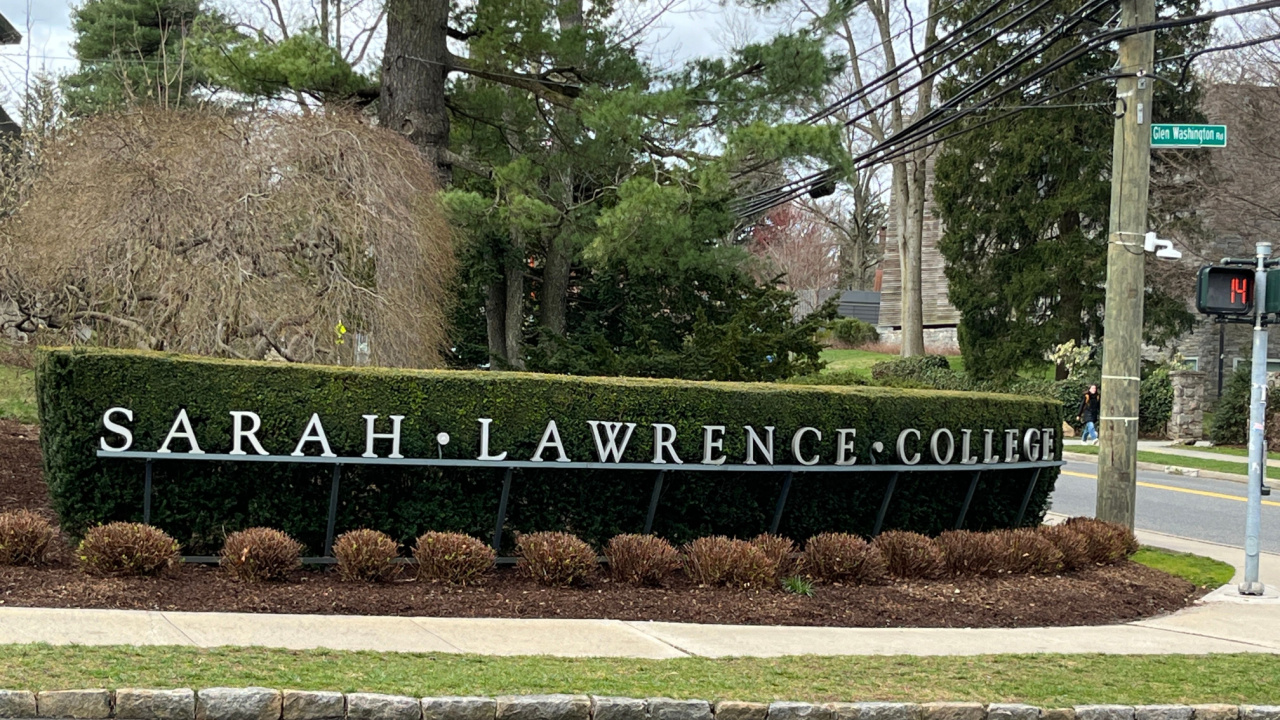
Samuel J. Abrams, a professor at Sarah Lawrence College in Westchester County, just north of New York City, has written a fascinating and disturbing essay about the growing radicalism of his students.
“I recently walked into my politics class at Sarah Lawrence College prepared to discuss civic protest. The prompt was Minneapolis, where a recent immigration enforcement surge has sparked mass demonstrations, a general strike, and the fatal shooting of two civilians by federal agents.
I planned to cover basic principles: the right to protest, the obligation to remain nonviolent, the distinction between civil disobedience and coercion. My students rejected the premise almost immediately.
‘What are we supposed to do?’ one asked. ‘Hold signs while people are being shot?‘
‘You’re asking us to play by rules that only we follow,’ another said.
They cited the Black Panthers. They invoked Stonewall. They argued, confidently, that throughout American history, violence or the credible threat of it was what forced change. Several endorsed armed confrontation with Immigration and Customs Enforcement as both effective and ethically justified.“
These views are not, of course, confined to students at Sarah Lawrence but are certainly widely shared at virtually all of America’s prestigious universities.
There are many reasons for this growing polarization, which has been documented extensively in these pages and elsewhere. Abrams correctly points to the outrageous rhetoric that has now become routine among leading Democrat politicians.
“Last month, Philadelphia District Attorney Larry Krasner issued a statement that would have been unthinkable from a major American law-enforcement official a generation ago. Speaking about federal immigration agents, Krasner declared: ‘In a country of 350 million, we outnumber them. If we have to hunt you down the way they hunted down Nazis for decades, we will find your identities. We will find you. We will achieve justice.‘”
The students, Abrams notes, are listening.
What is clear from the article, however, is that these young leftists have a very distorted idea what it means to choose violence over the rule of law. I’m hardly the first person to notice that many of the people interfering with ICE are delusionally imagining they can violently confront armed law enforcement agents without any consequences. At least two people have now lost their lives, but the lesson still has not sunk in. The communists and anarchists in the 1930s, and even the 1960s, were certainly depraved and destructive. But they at least possessed a certain realism or worldliness; they knew that violence is a two-way street, that revolutions are bloody, and that they lead to death and destruction on both sides.
Thanks in part to the propaganda bubble created by social media, many of today’s erstwhile revolutionaries don’t understand this. For them, violent rhetoric and even violent actions are a game in which their side, at least, is not supposed to get hurt. When ICE agents protect themselves with force, these naïve radicals are shocked, as if the other team has somehow violated the rules. This may be the first generation of utopians who want to wage a revolution without spilling their lattes.
If I were a guest-speaker in Professor Abrams class, I might offer his students the following observations:
You have made it clear that you reject civil disobedience — a venerable form of American protest that respects the law while seeking to change it — in favor of violently repudiating the legitimate exercise of government authority. Trump ran on the issue of deportations. He won. One of the main immigration laws that ICE is enforcing has been on the books for decades (signed by Bill Clinton in 1996). Joe Biden, who was president as recently as 13 months ago, never sought to repeal any immigration laws; he simply ignored them. Before him, Barack Obama deported hundreds of thousands of people per year. Where were your protests then?
But rather than change the law, you wish to nullify it. Is this really a precedent you wish to set? If ICE stands down in the face of this extortion, it will mean the victory of mob rule. It is hard to see how the rule of law will survive once both sides conclude that “rejecting the results of an election” justifies riots and violent resistance.
Let me ask you a question you may not have considered: Who is the law designed to protect? The powerful and the well-armed don’t need protection. The framers of the constitution devised all those artful measures for managing our differences precisely to overcome the age-old tyranny of the strong over the weak.
You are students at an elite university in upscale Westchester County. How many of you have been in a fight? Punched someone in the face? Fired a gun? Killed anything larger than a bug? Do you really want to start a fight with millions of NRA members living in the middle of the country, people who keep a rifle in their pick-up and go hunting every weekend? These people, who may live 100 miles from the nearest sheriff’s station, can fend for themselves. Can you?
Your rhetoric about violence may push the country closer to rampant lawlessness. Perhaps that gives you a thrill of transgressive titillation. But if open conflict comes, it won’t be a game for the amusement of children playing at “war.”
A cynic who thinks you should face the consequences of your juvenile fantasies might paraphrase Menken by saying, “Give the students what they want – good and hard.” I won’t be that cynic. Instead, I’ll urge you to think carefully about what civil breakdown looks like. You may see it soon enough in Zohran Mamdani’s New York. You may be wishing for more law enforcement — even from the federal government — before too long.
Your posturing about violence is thoughtless and dangerous. The rule of law exists to protect people like you, and when it breaks down, the people most likely to get hurt are you.
Cut it out.